
Trusted by 165+ Homeowners
Attic Water Damage Restoration in Covington, GA
- Over 165 5-Star Reviews
- Free Estimates and Quotes
- 100% Satisfaction Guaranteed
- Child, Family & Pet Safe Steps
- 24-Hour Emergency Service
- Fully Licensed & Insured

Protecting Your Covington, GA Home From Attic Water Damage
When the Georgia humidity hangs heavy, or a sudden storm rolls through, your attic can become an unexpected victim. We’ve seen it all around here, from roof leaks caused by wind-driven rain to condensation issues that sneak up on you. This hidden space, so crucial for your home’s comfort, can quickly turn into a breeding ground for problems if water gets in. It’s not just about a few drips; unchecked attic water damage can lead to serious structural issues and costly mold growth if not handled right away. We’re here to help you navigate these tricky situations and get your attic back to its dry, healthy state.
We’ve helped hundreds of homeowners in your neighborhood deal with attic water problems, and our 165+ five-star reviews reflect that commitment. People trust us because we understand the unique challenges of living in this area and we tackle attic water damage with a focused, detailed approach. You’re not just getting a cleanup crew; you’re getting local experts who care about preserving your home’s integrity and your family’s well-being. We’re dedicated to providing a clear, effective path back to a dry and secure attic space for everyone around here.
- We specialize in pinpointing the exact source of attic water intrusion, whether it’s a roof leak, plumbing issue, or condensation problem, to ensure a permanent fix.
- Our advanced drying and dehumidification equipment is specifically chosen for its effectiveness in attics, tackling moisture in tight, hard-to-reach spaces.
- We go beyond just drying; we inspect for and address potential mold growth, safeguarding your home’s health and your family’s air quality.
How We Tackle Attic Water Damage Head-On
Dealing with attic water damage requires a methodical approach. It’s not a simple wipe-down job. When water sits in your attic, it can saturate insulation, warp wood, and create an ideal environment for mold. Cutting corners here means you’re likely to face recurring problems and even bigger expenses down the line. Our team follows a proven process designed to extract every bit of moisture, thoroughly dry the affected materials, and restore your attic to a safe condition. We focus on getting it right the first time, every time, so you can stop worrying about that damp, musty smell.
1. Initial Assessment and Water Source Identification
The first step is crucial: finding out exactly where the water is coming from and how far it has spread. Our technicians use specialized tools to detect moisture levels and trace the path of the water. This allows us to address the root cause, whether it’s a damaged shingle, a faulty vent pipe seal, or a plumbing leak in the ceiling above. Identifying the precise origin of the leak is key to preventing future damage.
2. Water Extraction
If there’s standing water in your attic, we’ll get it out quickly. We use powerful, portable extraction units designed to handle difficult spaces like attics. The goal is to remove as much bulk water as possible to begin the drying process efficiently. Prompt extraction helps to minimize the potential for secondary damage like mold and structural compromise.
3. Structural Drying and Dehumidification
This is where specialized equipment truly shines. We’ll set up industrial-grade air movers and dehumidifiers to circulate air and pull moisture out of the attic environment. This process is critical for drying out insulation, wood framing, and any other materials that have absorbed water. Proper drying can take several days, depending on the extent of the damage, and it’s essential for preventing long-term material degradation.
4. Mold Prevention and Remediation
After drying, we thoroughly inspect for any signs of mold growth. If mold is present, we have the expertise and equipment to safely remove it and prevent its return. This often involves antimicrobial treatments and ensuring the attic environment remains unfavorable for mold spores. Protecting your home’s health means addressing potential mold contamination proactively.
5. Final Inspection and Reporting
Before we consider the job done, we’ll conduct a final inspection with you to ensure everything is dry and any necessary remediation has been completed. We’ll provide a clear report of the work done and offer recommendations for preventing future attic water issues. Your complete satisfaction and a dry attic are our top priorities.
Don’t let attic water damage linger. Early intervention is key to preventing more extensive and expensive repairs. Contact us today for a thorough inspection and get your attic back to normal.
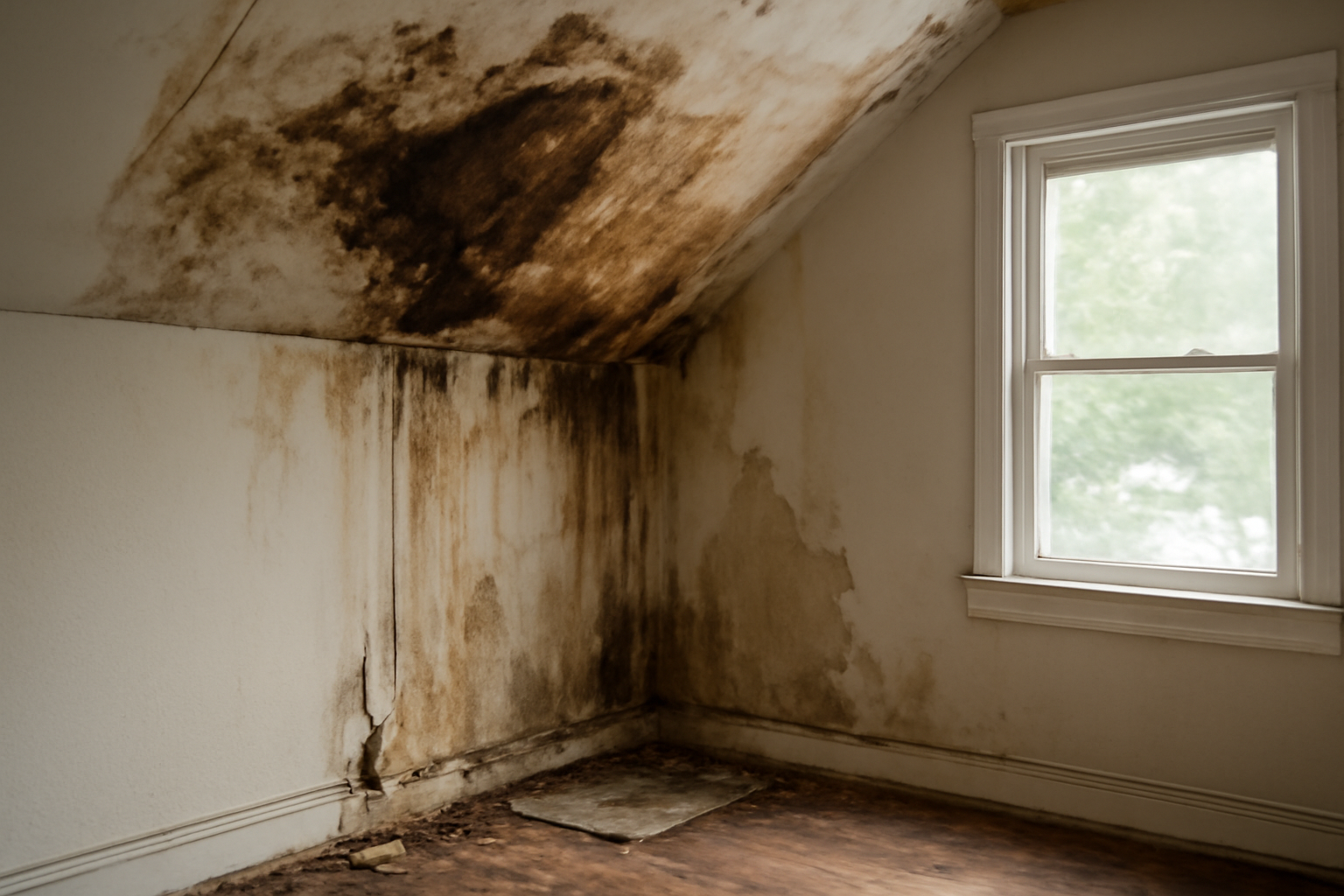
Warning Signs You Need Attic Water Damage Restoration
Catching attic water damage early can save you a lot of headaches and money. Your attic might not be a room you visit daily, but it’s working hard to protect your home. Ignoring small signs can lead to significant problems down the road, so it’s wise to know what to look for.
Musty Odors That Won’t Go Away
A persistent damp, musty smell, especially noticeable when you enter your home or are in the upper levels, is a strong indicator of moisture. This often means water has been present long enough to allow mold or mildew to start growing. Don’t ignore this unpleasant warning signal.
Visible Water Stains or Damp Spots
Look for discolored patches or damp areas on your attic’s ceiling, rafters, or insulation. These are direct signs that water has made its way in and is soaking into materials. Such stains are a clear sign of active water intrusion.
Sagging or Damaged Insulation
Attic insulation can become heavy and sag when it’s saturated with water. You might also notice clumps or wet spots. This not only points to water damage but also means your insulation is no longer effective, leading to higher energy bills.
Dripping Sounds or Visible Leaks
If you hear dripping sounds from your attic, especially after rain or during humid weather, or if you see actual drips, it’s a clear sign of a leak. This could be coming from your roof or condensation issues. Act fast to prevent further water saturation.
Mold or Mildew Growth
Visible mold, often appearing as fuzzy green, black, or white patches, is a serious health hazard and a sure sign of prolonged moisture. This requires immediate professional attention to ensure it’s handled safely. Addressing potential mold problems is critical for your home’s health.
Increased Humidity in Your Home
If your upstairs rooms feel unusually humid, even with air conditioning running, it could be that moisture is escaping from a damp attic into your living space. This indicates a breach in your home’s envelope.
Attic Water Damage Restoration vs. DIY: When To Call a Professional
| Situation | DIY? | Call a Pro? | Why |
|---|---|---|---|
| Small, isolated damp spot on attic ceiling after a minor rain shower. | Yes, monitor closely. | Yes, if it recurs or spreads. | DIY is fine for observation, but recurring issues need professional diagnosis. |
| Musty smell in the attic, no visible leaks. | Maybe, if you can identify and fix the cause (e.g., poor ventilation). | Yes, especially if the smell persists. | Odors often indicate hidden mold or moisture issues that need expert assessment. |
| Visible water stains spreading across rafters. | No. | Yes, absolutely. | This indicates significant water intrusion that requires professional assessment and drying. |
| Sagging, wet insulation. | No. | Yes, definitely. | Saturated insulation needs professional drying and potential replacement to prevent mold and structural damage. |
| Suspected roof leak causing water to pool in the attic. | No. | Yes, immediately. | Roof leaks require immediate professional repair and water damage mitigation. |
| Condensation forming on pipes or ductwork in the attic. | Maybe, if it’s minor and due to poor insulation or ventilation. | Yes, if it’s widespread or persistent. | Persistent condensation points to underlying HVAC or insulation issues needing expert review. |
While minor dampness might seem manageable, attic water damage often involves hidden moisture and potential mold growth that DIY methods can’t fully address. For anything beyond a very small, isolated incident, calling a professional is the safest and most effective route to ensure your home is properly dried and protected.
Attic Water Damage Restoration Cost In Covington, GA
The cost to restore attic water damage in Covington, GA, can vary widely. Factors like the size of your attic, the severity of the water damage, the type of materials affected (like insulation or wood framing), and the time it takes to dry everything out all play a role. These figures are estimates to give you a general idea.
| Service | Typical Price Range | What Affects Cost |
|---|---|---|
| Initial Inspection and Water Source Identification | $200 – $500 | Complexity of locating the leak and the size of the attic. |
| Water Extraction (Bulk Water Removal) | $400 – $1,200 | Volume of water to be removed and accessibility of the attic space. |
| Structural Drying and Dehumidification | $800 – $3,000+ | Size of the attic, degree of saturation, and duration of drying needed. |
| Mold Inspection and Testing | $300 – $700 | Extent of suspected mold growth and need for laboratory analysis. |
| Mold Remediation | $500 – $4,000+ | Amount of mold, type of surfaces affected, and containment requirements. |
| Insulation Removal and Replacement | $500 – $2,500+ | Square footage of the attic and type of insulation material. |
These are just estimates, and a precise quote requires an on-site assessment by our trained technicians. We offer free estimates to help you understand the exact cost for your specific situation.
Service Areas Near Covington, GA
Conyers, Snellville, Lithonia, Loganville, Monroe, Social Circle, Oxford, McDonough, Stockbridge, Jonesboro, Fayetteville, Peachtree City, Tyrone, Hampton, Locust Grove, Jackson, Monticello, Greensboro, Madison, Jefferson.
Common Questions About Attic Water Damage Restoration
What’s the fastest way to dry out my attic after a leak?
The fastest way to dry out your attic involves professional equipment and a systematic approach. We use high-powered air movers to circulate air and industrial dehumidifiers to remove moisture from the air and materials. While you can try opening vents, it’s unlikely to be as effective as our specialized tools which are designed to reach deep into materials and reduce drying time significantly, preventing further damage.
How much does attic water damage restoration typically cost?
The cost for attic water damage restoration varies greatly depending on the extent of the damage, the size of your attic, and the specific services needed, such as water extraction, drying, and mold remediation. For smaller issues, you might be looking at a few hundred dollars, while more extensive problems could run into several thousand. We provide free, detailed estimates after an on-site inspection to give you an accurate price. We also work with insurance companies to help ease the financial burden.
Will water damage in my attic cause mold?
Yes, water damage in your attic is a prime catalyst for mold growth. Mold thrives in dark, damp environments, and attics often provide just that. If water isn’t removed and the area isn’t thoroughly dried and properly ventilated, mold can start to grow within 24-48 hours. Our team performs thorough inspections for mold and offers expert mold remediation services to protect your home’s health.
How long does the attic water damage drying process usually take?
The drying process for attic water damage can take anywhere from a few days to a couple of weeks. It depends heavily on how much water was present, the type of building materials affected, and the ambient humidity. We use advanced monitoring equipment to track the drying process and ensure all materials are dried to safe levels, preventing future issues like structural decay or mold.
Can I prevent water damage in my attic?
Preventing attic water damage involves regular maintenance and vigilance. You can help by ensuring your roof is in good repair, gutters are clean and properly directing water away from your foundation, and attic ventilation is adequate to prevent condensation. Checking for leaky pipes or ductwork in the attic periodically is also wise. We can offer preventative maintenance tips during our visits to help you avoid future problems.
Check Our Other Relevant Services
- Attic Water Damage Restoration in Alpharetta, GA
- Attic Water Damage Restoration in Belvedere Park, GA

Jerry Johns is a licensed Damage Restoration Expert with over 20 years of hands-on experience helping homeowners and businesses navigate property crises. As a trusted authority in the field, Jerry combines technical precision with a compassionate approach to disaster recovery.
𝗖𝗲𝗿𝘁𝗶𝗳𝗶𝗰𝗮𝘁𝗶𝗼𝗻𝘀: Jerry holds multiple elite IICRC certifications, including Water Damage Restoration (WRT), Applied Microbial Remediation (Mold), Applied Structural Drying (ASD), Odor Control, and Fire and Smoke Restoration.
𝗙𝗮𝘃𝗼𝗿𝗶𝘁𝗲 𝗣𝗮𝘀𝘁𝗶𝗺𝗲: When he isn’t on a job site, Jerry is an avid outdoorsman who enjoys fly fishing and restoring vintage woodworking tools.
𝗕𝗲𝘀𝘁 𝗣𝗮𝗿𝘁 𝗼𝗳 𝘁𝗵𝗲 𝗝𝗼𝗯: Jerry finds the most fulfillment in seeing the relief on a client’s face when their property is finally restored to its pre-loss condition, turning a stressful disaster into a fresh start.


