
Trusted by 165+ Homeowners
Attic Water Damage Restoration in College Park, GA
- Over 165 5-Star Reviews
- Free Estimates and Quotes
- 100% Satisfaction Guaranteed
- Child, Family & Pet Safe Steps
- 24-Hour Emergency Service
- Fully Licensed & Insured

Don’t Let Attic Water Damage Go Unchecked in College Park, GA
If you’re noticing unusual damp spots or a musty smell creeping down from your attic, it’s crucial to act fast. Attic water damage can seem minor at first, but it spreads quickly, affecting everything from insulation to structural beams. Ignoring these early signs in your College Park, GA home could lead to much more significant, and expensive, problems down the road. You want to make sure you’re addressing the issue before it truly becomes a crisis, and that means understanding what to look for and when to call for help. Prompt attention is key to minimizing the impact on your property.
Homeowners in the area have trusted our team for over 165 five-star reviews because we understand the unique challenges attic water damage presents. We’re not just another restoration company; we’re your neighbors, dedicated to restoring your home efficiently and effectively. You’ll find our communication is clear, and our process is designed to get your attic back to normal with minimal disruption to your life. We’ve seen it all, from minor leaks to significant storm-related flooding, and we’re prepared to handle whatever your attic throws at us.
- We specialize in rapidly extracting water from the most inaccessible areas, preventing mold growth that thrives in dark, damp attic spaces.
- Our advanced drying technology targets the specific moisture trapped within insulation and wood, ensuring a thorough and lasting restoration.
- We meticulously document the damage and the restoration process, which is vital for insurance claims and your own records.
How We Tackle Attic Water Damage Restoration
When water finds its way into your attic, time is your enemy. The longer it sits, the more damage it causes and the higher the risk of mold and structural compromise. Our approach to attic water damage restoration is built on speed and precision. We deploy specialized equipment and follow a systematic process to remove water, dry the affected materials, and restore your attic to its pre-loss condition. Skipping any steps or using the wrong methods can leave behind hidden moisture, leading to mold and decay that you might not discover for months, or even years. Fast action prevents secondary damage.
Emergency Water Extraction
Our first priority is to remove standing water from your attic as quickly as possible. We use powerful, truck-mounted or portable extraction units to pump out water. This step is critical to halt the immediate damage and prevent further saturation of your attic’s contents and structure. We aim to complete this phase within the first 24 hours after detection.
Advanced Drying and Dehumidification
Once the bulk of the water is gone, we bring in specialized drying equipment. This includes high-velocity air movers and industrial-grade dehumidifiers. These machines work together to circulate air and pull moisture out of the air and materials like wood framing and insulation. This process can take several days, depending on the extent of the saturation, but it’s essential for preventing mold and structural issues.
Content Manipulation and Cleaning
If any personal belongings or stored items were affected by the water, we carefully evaluate them. Items that can be salvaged will be cleaned, deodorized, and dried in a controlled environment. Items that are beyond repair will be safely removed, with your approval. Our goal is to restore as much as possible.
Mold Prevention and Remediation
Attic environments are prime breeding grounds for mold. As part of our drying process, we often use antimicrobial treatments to inhibit mold and mildew growth. If mold has already begun to form, our certified technicians will safely contain and remove it according to strict industry standards, ensuring your attic is healthy and safe. Mold remediation is a top priority.
Reconstruction and Insulation Replacement
After drying and cleaning, we assess any structural damage. This might involve repairing or replacing damaged wood, drywall, or other building materials. We can also help with the removal and replacement of water-damaged insulation to ensure your attic is properly insulated and protected going forward. We focus on restoring your attic’s integrity.
Don’t let attic water damage compromise your home’s safety and structure. Contact us immediately if you suspect a problem. We’re here to help you navigate this stressful situation with clear communication and expert service.
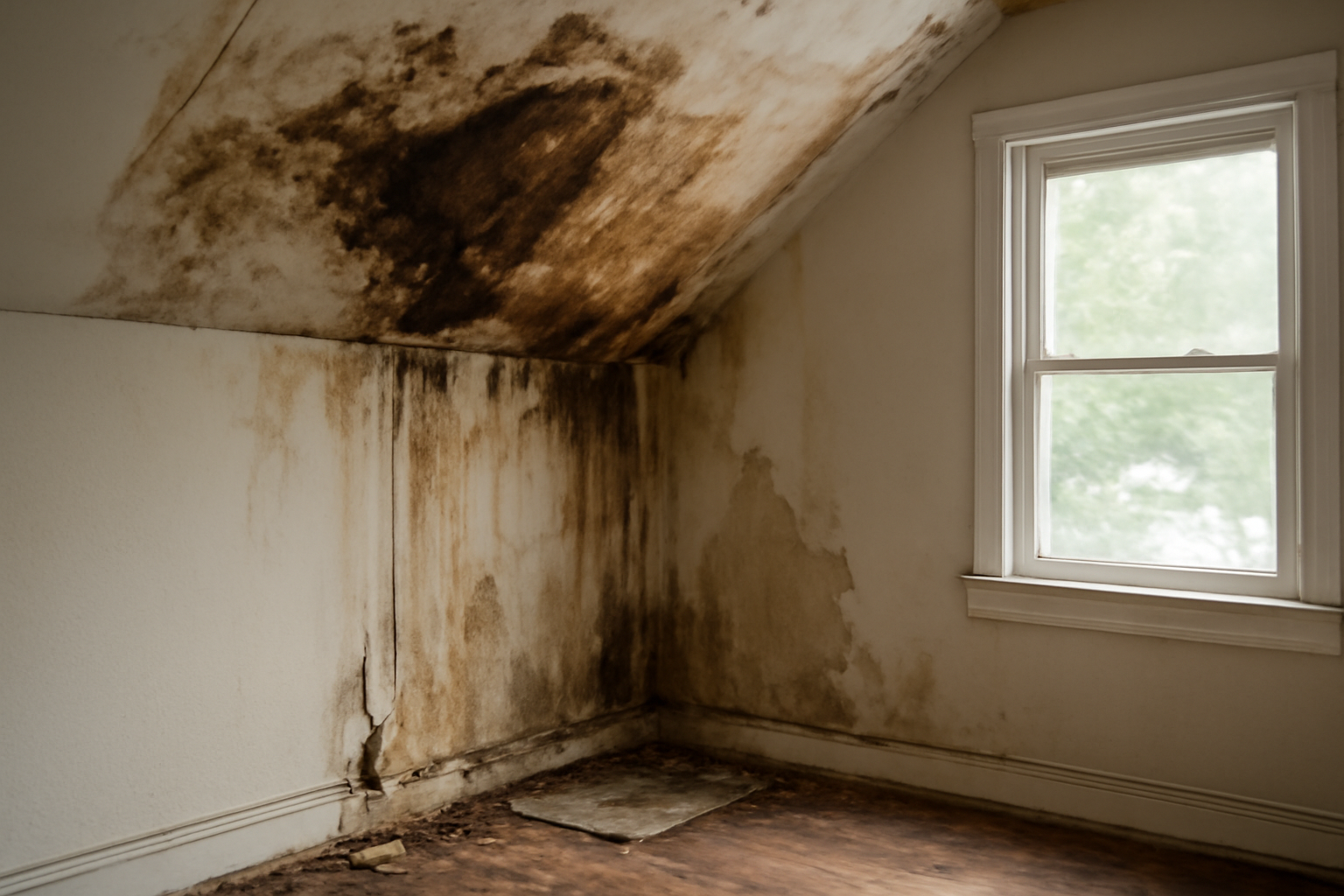
Signs You Need Attic Water Damage Restoration
Catching attic water damage early is one of the best ways to save yourself time, money, and a lot of headaches. Your attic might be out of sight, but it often gives clues when something’s wrong. Paying attention to subtle changes can help you avoid bigger issues later. Early detection saves money.
Musty Odors That Won’t Go Away
A persistent, damp, musty smell is often the first and most obvious sign of water in your attic. This odor indicates moisture is present, likely causing mold or mildew to grow on wood, insulation, or other materials. If you notice this smell consistently, it’s a strong indicator of hidden water.
Visible Water Stains or Damp Spots
Look for discolored patches or damp areas on your attic’s ceiling or walls. These can appear as yellow, brown, or even dark gray stains. Even small, seemingly insignificant spots are a sign that water has penetrated the building materials and needs to be addressed. Don’t dismiss small stains.
Sagging Ceiling or Attic Floor
Waterlogged materials, especially drywall and insulation, become heavy and can start to sag. If you notice your ceiling appearing to droop or your attic floor looking uneven, it’s a serious sign of water saturation. This indicates potential structural compromise.
Increased Humidity or Dampness in Upper Levels
Water from the attic can increase the overall humidity in your home, especially on the top floor. If you notice your upstairs rooms feel unusually damp, clammy, or warmer than the rest of the house, the attic could be the source. Monitor your home’s climate.
Mold or Mildew Growth
Visible patches of mold or mildew, often appearing as fuzzy green, black, or white spots, are a clear sign of a water problem. Mold thrives in damp, dark environments like attics. If you see mold, it’s crucial to address the water source and have the mold professionally removed. Mold is a health hazard.
Dripping Sounds or Active Leaks
In some cases, you might actually hear dripping sounds coming from your attic, or even see water actively dripping. This is a clear sign of an active leak that requires immediate attention. Act on active leaks immediately.
Attic Water Damage Restoration vs. DIY: When To Call a Professional
| Situation | DIY? | Call a Pro? | Why |
|---|---|---|---|
| Minor condensation near a vent | Yes, if you can easily access and dry the area without disturbing insulation. | Yes, if the condensation is persistent or widespread. | Persistent condensation can indicate ventilation issues or insulation problems that require professional assessment. |
| Small, isolated damp spot on attic insulation | Maybe, with extreme caution and proper safety gear. | Yes, especially if you can’t pinpoint the source. | Attics are dangerous places; DIY attempts can lead to falls, electrocution, or missed damage. |
| Water stains on the attic’s wooden beams | No. | Yes, immediately. | Wood can quickly rot when saturated, leading to structural instability. Professionals can assess and treat the wood. |
| Musty odor throughout the attic | No. | Yes, immediately. | A pervasive odor suggests widespread mold growth, which requires specialized containment and removal. |
| Visible mold growth on insulation or wood | No. | Yes, immediately. | Mold spores can be harmful and require professional containment and remediation to prevent spreading. |
| Water pooling on the attic floor | No. | Yes, immediately. | Standing water indicates a significant leak and requires professional extraction and drying equipment to prevent long-term damage. |
While minor, easily manageable moisture might be something you can address yourself, most attic water damage situations are best left to the pros. The complexity of attic spaces, the potential for hidden damage, and the risks involved with mold and structural integrity mean that professional intervention is often necessary for a complete and safe restoration.
Attic Water Damage Restoration Cost In College Park, GA
Understanding the cost of attic water damage restoration in College Park, GA involves looking at several factors. The price can vary significantly based on the severity of the water intrusion, the size of the affected attic space, and the extent of the damage to insulation, wood, and other materials. These are general estimates to give you an idea. The best way to get an accurate price is through a professional assessment of your specific situation.
| Service | Typical Price Range | What Affects Cost |
|---|---|---|
| Water Extraction | $500 – $2,500 | The amount of water to be removed and the accessibility of the attic. |
| Structural Drying (Air Movers & Dehumidifiers) | $750 – $3,000 | The duration needed to dry the space and the number of units required. |
| Mold Inspection & Testing | $300 – $1,000 | The size of the attic and the complexity of the suspected mold issue. |
| Mold Remediation | $1,000 – $5,000+ | The square footage affected by mold and the containment methods needed. |
| Damaged Insulation Removal & Replacement | $400 – $1,500+ | The type and amount of insulation needing removal and replacement. |
| Minor Structural Repairs (e.g., wood rot) | $500 – $2,000+ | The extent of wood damage and the complexity of the repairs. |
These figures are meant to provide a general understanding of potential costs. For a precise quote tailored to your home’s unique needs, schedule a free estimate with our team. We’ll thoroughly inspect your attic and provide a clear breakdown of the recommended services and their costs.
Service Areas Near College Park, GA
Atlanta, East Point, Hapeville, Forest Park, Jonesboro, Riverdale, Morrow, Clayton, Lovejoy, Tyrone, Fayetteville, Peachtree City, Sandy Springs, Roswell, Alpharetta, Marietta, Kennesaw, Smyrna, Dunwoody, Tucker.
Common Questions About Attic Water Damage Restoration
How quickly do I need to address attic water damage?
You need to address attic water damage as soon as possible. Within 24-48 hours, mold can begin to grow, and structural materials like wood and drywall can start to degrade. The longer you wait, the more extensive and costly the damage will become. Our team is available 24/7 to respond to your emergency and begin the restoration process promptly, limiting further harm to your property.
Will my homeowner’s insurance cover attic water damage?
Generally, homeowner’s insurance policies cover water damage that results from sudden and accidental events, such as a burst pipe or a roof leak. However, damage from gradual leaks or lack of maintenance is often excluded. It’s important to review your policy and contact your insurance provider. We can help document the damage for your claim and work with your adjuster to ensure the necessary restoration work is approved.
How do you dry out an attic effectively?
Drying an attic requires specialized equipment and a systematic approach. We use high-speed air movers to circulate air and increase evaporation, along with industrial-grade dehumidifiers to pull moisture from the air. We also monitor humidity and temperature levels closely to ensure the drying process is efficient and complete. This goes beyond what simple fans can achieve, guaranteeing that hidden moisture is removed to prevent long-term problems.
What are the health risks associated with attic water damage?
The primary health risk from attic water damage is mold growth. Exposure to mold can cause allergic reactions, asthma attacks, and other respiratory problems, especially for sensitive individuals. Damp conditions can also attract pests. Our technicians are trained to identify and remediate mold safely, using protective gear and containment procedures to protect your family’s health.
How can I prevent water damage in my attic?
Regular maintenance is key to preventing attic water damage. This includes inspecting your roof for damage, ensuring gutters and downspouts are clear and directing water away from your foundation, checking plumbing and HVAC components in the attic for leaks, and ensuring proper attic ventilation. Scheduling an annual inspection of your attic can help catch potential issues early. If you suspect a problem or need advice on prevention, our team can offer guidance.
Check Our Other Relevant Services

Jerry Johns is a licensed Damage Restoration Expert with over 20 years of hands-on experience helping homeowners and businesses navigate property crises. As a trusted authority in the field, Jerry combines technical precision with a compassionate approach to disaster recovery.
𝗖𝗲𝗿𝘁𝗶𝗳𝗶𝗰𝗮𝘁𝗶𝗼𝗻𝘀: Jerry holds multiple elite IICRC certifications, including Water Damage Restoration (WRT), Applied Microbial Remediation (Mold), Applied Structural Drying (ASD), Odor Control, and Fire and Smoke Restoration.
𝗙𝗮𝘃𝗼𝗿𝗶𝘁𝗲 𝗣𝗮𝘀𝘁𝗶𝗺𝗲: When he isn’t on a job site, Jerry is an avid outdoorsman who enjoys fly fishing and restoring vintage woodworking tools.
𝗕𝗲𝘀𝘁 𝗣𝗮𝗿𝘁 𝗼𝗳 𝘁𝗵𝗲 𝗝𝗼𝗯: Jerry finds the most fulfillment in seeing the relief on a client’s face when their property is finally restored to its pre-loss condition, turning a stressful disaster into a fresh start.


