
Trusted by 165+ Homeowners
Attic Water Damage Restoration in Morrow, GA
- Over 165 5-Star Reviews
- Free Estimates and Quotes
- 100% Satisfaction Guaranteed
- Child, Family & Pet Safe Steps
- 24-Hour Emergency Service
- Fully Licensed & Insured

Don’t Let Attic Leaks Ruin Your Home in Morrow, GA
You just climbed into your attic, maybe to store holiday decorations or check on something. Then you see it: dark stains spreading across the ceiling joists, maybe even a drip, drip, dripping sound echoing in the quiet space. It’s a sight that can make your stomach drop. That unwelcome moisture in your attic isn’t just an eyesore; it’s a serious structural threat that needs immediate attention before it causes widespread damage. Ignoring attic water issues can quickly escalate into costly repairs.
We’ve helped over 165 local families in the area deal with similar situations, earning their trust through prompt, effective Attic Water Damage Restoration. Homeowners around here choose our team because we understand the unique challenges of attics and deliver reliable, science-backed drying. You can count on us to get your attic back to its dry, safe state.
- We use specialized equipment to precisely measure and monitor moisture levels, ensuring every bit of dampness is eliminated from your insulation and framing.
- Our technicians are trained to identify the source of the leak, preventing future occurrences and protecting your home’s integrity.
- We focus on preventing mold and mildew growth, which thrive in damp attic environments and can pose significant health risks.
The Science Behind Attic Water Damage Restoration
Dealing with attic water damage requires more than just wiping up puddles. It’s a meticulous process rooted in understanding how moisture behaves within building materials. If not handled correctly, residual dampness can linger for months, leading to rot and mold, even if it’s out of sight. Our approach prioritizes thorough structural drying and containment to prevent secondary damage. We’ve seen what happens when a job isn’t done right, and that’s why our crews follow strict protocols to ensure your attic is properly restored.
Initial Assessment and Containment
The first step involves our trained technicians carefully inspecting your attic to pinpoint the exact source and extent of the water intrusion. We’ll assess affected materials like insulation, wood framing, and drywall. Then, we set up containment barriers if needed to prevent the spread of moisture and potential contaminants to other parts of your home, focusing on isolating the affected zone.
Water Extraction and Removal
Depending on the severity, we may use specialized pumps or vacuums to remove standing water. For areas where water has saturated materials, like insulation, we often need to remove and replace it to allow for effective drying and prevent future mold issues. This is a critical removal phase.
Structural Drying
This is where the science really comes into play. We deploy industrial-grade dehumidifiers and air movers strategically placed within the attic space. These machines work to lower the humidity and increase airflow, accelerating the evaporation process. We monitor moisture content with specialized meters, ensuring we reach dry structural integrity.
Moisture Monitoring
Our work isn’t done until your attic is completely dry. We use advanced moisture meters to take readings from various materials and depths, confirming that all hidden moisture has been removed. This meticulous monitoring ensures the environment is no longer conducive to mold growth and protects against long-term material decay.
Odor Control and Remediation
Water damage often brings musty odors. Once drying is complete, we employ specialized equipment and treatments to neutralize any lingering smells, leaving your attic fresh. We also address any potential mold growth, performing necessary remediation to ensure a healthy indoor environment.
Don’t wait for the problem to get worse. Call us today for fast, expert attic drying and restoration.
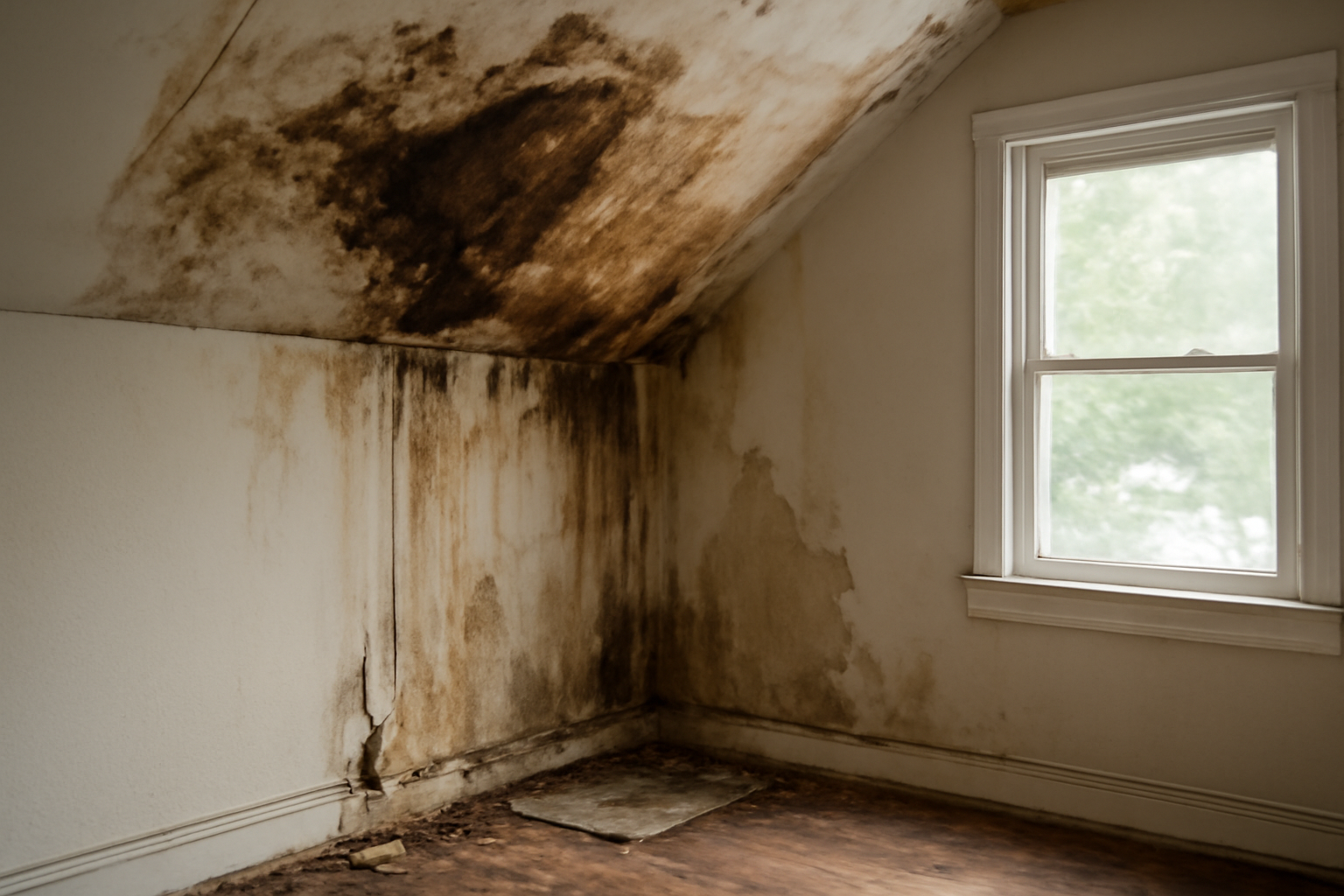
Warning Signs You Need Attic Water Damage Restoration
Catching attic water damage early is key to minimizing its impact on your home and your wallet. What might seem like a small issue can quickly turn into a major headache if left untreated. Being aware of the subtle (and not-so-subtle) indicators can save you a lot of trouble down the line. Our team is ready to help you identify and tackle these problems promptly.
Musty Odors That Won’t Go Away
A persistent, damp, or musty smell emanating from your upper floors or directly from the attic is a classic sign of hidden moisture. This odor often indicates that mold or mildew is beginning to grow on damp materials. You can’t just ignore persistent unpleasant smells.
Visible Water Stains or Discoloration
Look for yellowish or brownish stains on your attic ceiling, insulation, or the underside of the roof decking. These are clear indicators that water has been present. Even small, faint stains mean you need immediate professional inspection.
Sagging Ceiling or Drywall
If you notice areas of your ceiling or the attic floor that appear to be sagging, it’s a serious warning. This indicates that the materials have absorbed a significant amount of water and are losing their structural integrity. This is a critical structural warning.
Pest Infestations
Damp environments can attract various pests like rodents, insects, and termites, which are drawn to moisture and decaying wood. An increase in pest activity in your attic could be a symptom of underlying water damage. Watch for unusual pest activity.
Mold or Mildew Growth
You might see visible patches of mold, often appearing as black, green, or white fuzzy or slimy spots, on wood, insulation, or other surfaces in the attic. This is a health hazard that requires professional remediation.
Dripping Sounds or Active Leaks
The most obvious sign is hearing dripping water or seeing active leaks from the attic space, especially after rain or snowmelt. This means water is actively intruding and needs urgent intervention.
Attic Water Damage Restoration vs. DIY: When To Call a Professional
| Situation | DIY? | Call a Pro? | Why |
|---|---|---|---|
| Minor condensation on a duct pipe | Yes, if you can easily access and dry it. | Maybe, if you’re unsure of the cause or extent. | Condensation can indicate poor insulation or ventilation issues. |
| A small, slow drip from a single spot after heavy rain | No. | Yes. | Attic leaks often have hidden causes and require specialized drying equipment. |
| Widespread dampness across attic insulation | No. | Yes. | Requires professional moisture meters and industrial drying equipment to prevent mold. |
| Visible mold growth in the attic | No. | Yes. | Mold can be a serious health hazard and requires professional containment and remediation. |
| A significant leak causing visible damage to ceiling drywall below the attic | No. | Yes. | This indicates structural compromise and potential for extensive damage. |
| Suspected leak from roof damage after a storm | No. | Yes. | Roof repairs and subsequent attic drying need to be handled by experienced professionals. |
For most attic water intrusion scenarios, especially those involving more than a few drips, professional intervention is essential. Our team has the specialized tools and knowledge to handle complex drying challenges and ensure your attic is fully restored.
Attic Water Damage Restoration Cost In Morrow, GA
The cost of attic water damage restoration in Morrow, GA, can vary significantly. Factors like the size of your attic, the amount of water present, the type of insulation affected, and the extent of structural damage all play a role. These figures are general estimates and a thorough on-site assessment is always needed for an accurate quote.
| Service | Typical Price Range | What Affects Cost |
|---|---|---|
| Attic Inspection and Assessment | $200 – $500 | Complexity of the attic space and number of access points. |
| Water Extraction (Standing Water) | $500 – $1,500 | Volume of water to be removed and accessibility. |
| Dehumidification and Air Moving | $700 – $2,000 | Size of the attic and duration of the drying process needed. |
| Insulation Removal and Replacement | $1,000 – $3,000+ | Square footage of the attic and type of insulation. |
| Minor Structural Repair (e.g., joist bracing) | $300 – $1,000 | Severity of wood rot or damage. |
| Mold Remediation (if necessary) | $1,000 – $4,000+ | Extent and type of mold growth, and containment requirements. |
An on-site inspection by our qualified technicians will provide you with a precise estimate for your specific Attic Water Damage Restoration needs. We offer free, no-obligation estimates.
Service Areas Near Morrow, GA
We proudly serve Morrow, GA, and the surrounding communities, including Atlanta, Stockbridge, Jonesboro, Riverdale, Forest Park, Lovejoy, Hampton, Fayetteville, Decatur, Chamblee, Doraville, Brookhaven, Sandy Springs, Roswell, Johns Creek, Alpharetta, Duluth, Suwanee, Lawrenceville, and Snellville.
Common Questions About Attic Water Damage Restoration
What is the fastest way to dry out a wet attic?
The fastest way involves professional equipment like industrial-grade dehumidifiers and high-velocity air movers, strategically placed to maximize airflow and moisture removal. Our team uses these tools to create an optimal drying environment, significantly speeding up the process compared to natural evaporation. We focus on efficient structural drying.
How long does attic water damage restoration typically take?
The timeline can vary from a few days to over a week, depending on the amount of water, the extent of saturation, and the attic’s construction. We continuously monitor moisture levels to ensure we achieve complete dryness efficiently.
Is attic water damage a health hazard?
Yes, it can be. Damp attics are breeding grounds for mold and mildew, which can release spores into your home’s air supply, potentially causing respiratory problems and allergic reactions. Our remediation process includes thorough mold cleanup.
What kind of equipment do you use for attic water damage?
We use specialized moisture meters to detect hidden dampness, powerful water extractors for standing water, and a variety of industrial dehumidifiers and air movers designed for large spaces like attics. This equipment ensures we can effectively address even challenging drying situations.
How can I prevent water damage in my attic in the future?
Regular inspections of your roof, gutters, and plumbing vents are crucial. Ensuring proper attic ventilation and insulation can also help prevent condensation issues. We can offer advice on preventative maintenance after restoration.
Check Our Other Relevant Services
Serving Morrow, GA And Nearby Areas


