
Trusted by 165+ Homeowners
Attic Water Damage Restoration in Sandy Springs, GA
- Over 165 5-Star Reviews
- Free Estimates and Quotes
- 100% Satisfaction Guaranteed
- Child, Family & Pet Safe Steps
- 24-Hour Emergency Service
- Fully Licensed & Insured

When Water Attacks Your Attic in Sandy Springs, GA
We’ve been tackling attic water damage in your neighborhood for a long time. We know how easily a small leak from a damaged pipe or a roof issue can turn into a major headache, especially in older homes around here or properties with complex rooflines. You might not even realize there’s a problem until you start smelling something off or see stains appearing downstairs. Dealing with this kind of damage requires a specialized approach and an understanding of how attics function, which is exactly what our team brings to every job. We’re here to help you resolve this issue quickly and effectively.
Over 165 five-star reviews from homeowners just like you tell the story of why they trust us when their attic is soaked. It’s because we don’t just clean up the mess; we get to the root cause and make sure your home is safe and dry again. You want a team that understands the specific challenges of attic water damage, and that’s precisely what you’ll get when you call us. We’re committed to providing clear communication and delivering results that last, giving you back your comfort and security.
- We focus on preventing mold growth by thoroughly drying all affected materials, including insulation and structural wood, which is crucial in the humid climate around Sandy Springs, GA.
- Our specialized equipment can reach and dry out even the most inaccessible areas of your attic, ensuring no hidden moisture remains to cause future problems.
- We handle the complexities of dealing with your insurance provider, making the claims process smoother for you during an already stressful time.
How We Tackle Attic Water Damage Restoration
When water finds its way into your attic, it’s not just about mopping up. It’s a delicate balance of science and careful work to prevent long-term structural damage and health risks. Our process is designed to be thorough and efficient, minimizing disruption to your life. Cutting corners here can lead to persistent musty odors, compromised insulation, and even structural rot, so we make sure every step is done correctly. We’ve developed a methodical approach that our technicians follow to ensure complete restoration and prevent recurrence, giving you confidence in your home’s integrity.
Initial Inspection and Assessment
The first thing our team does is conduct a detailed inspection of your attic to pinpoint the source of the water intrusion and assess the full extent of the damage. We use specialized tools to detect hidden moisture and evaluate the condition of insulation, wood framing, and any ductwork. This initial assessment is critical for creating an effective restoration plan and providing you with an accurate project estimate.
Water Extraction and Removal
Once we’ve identified the affected areas, we begin the water removal process. For attics, this often involves specialized pumps and vacuums designed to remove standing water efficiently from tight spaces. We work quickly to remove as much moisture as possible, preventing further saturation of building materials and reducing the risk of mold development.
Drying and Dehumidification
After the bulk of the water is gone, the real drying begins. We strategically place industrial-grade air movers and dehumidifiers throughout the attic space to accelerate the evaporation of remaining moisture from wood, drywall, and insulation. This stage is vital for preventing secondary damage and restoring your attic to safe humidity levels.
Mold Prevention and Treatment
Attics are particularly susceptible to mold growth due to their often-poor ventilation and consistent warmth. If mold is detected or if the conditions are favorable for its development, our team will apply EPA-approved antimicrobial treatments. Our goal is to eliminate any existing mold and create an environment that discourages future growth.
Reconstruction and Insulation Replacement
Depending on the severity of the water damage, some materials may need to be removed and replaced. This could include damaged insulation, sections of drywall, or even compromised wooden beams. We handle all necessary repairs to restore your attic to its pre-loss condition, ensuring it’s both structurally sound and properly insulated for energy efficiency. We’ll work to restore your attic’s functionality.
If you suspect water has made its way into your attic, don’t wait for the problem to worsen. Contact us immediately to schedule an inspection and get the restoration process started. We’re ready to provide expert assistance and bring your attic back to normal.
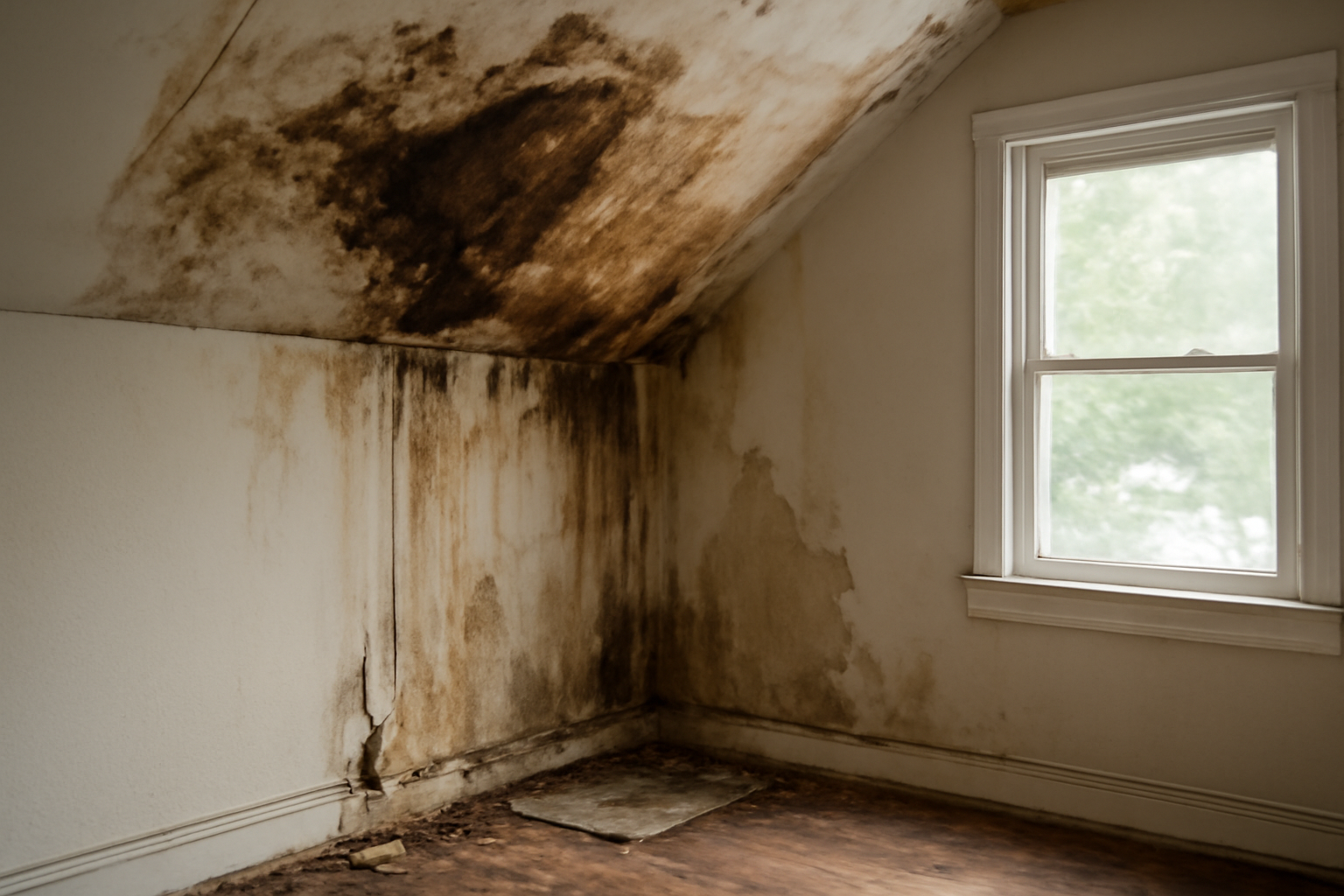
Warning Signs You Need Attic Water Damage Restoration
Catching attic water damage early can save you a significant amount of money and prevent more serious issues like mold infestations and structural compromise. Your attic is out of sight, out of mind for many homeowners, making it easy to miss the subtle clues that water is causing trouble. Being aware of these signs is your first line of defense against extensive damage.
Musty Odors That Won’t Go Away
A persistent damp, musty smell, especially when you’re in the upper levels of your home or near the attic access, is a strong indicator of hidden moisture. This odor is often caused by mold or mildew that’s starting to grow on damp materials. Ignoring this can lead to widespread mold contamination.
Visible Water Stains or Discoloration
Look for brown or yellowish water stains on the ceiling of your top floor, or on the underside of the roof decking or rafters in your attic. These marks are clear evidence that water has been present and is likely soaking into the building materials. These stains signal immediate attention is needed.
Dripping Water from the Ceiling or Fixtures
If you see actual drips of water coming from your ceiling, light fixtures, or vents, especially after rain or if you have a plumbing issue, it’s a critical sign. This means there’s likely a significant breach allowing water to enter your attic and work its way down. This requires urgent water removal.
Sagging Ceiling or Wet Spots on Drywall
Waterlogged drywall can start to sag or show visible wet spots. This is a sign that the structural integrity of the ceiling material is being compromised by the absorbed moisture. A sagging ceiling is a serious structural warning.
Increased Humidity Levels in Your Home
If your home suddenly feels more humid than usual, and you haven’t changed your habits, the attic could be the culprit. Leaking water can increase the overall humidity, leading to condensation issues elsewhere in your home. Controlling humidity is key to preventing further damage.
Damaged or Wet Insulation
Check your attic insulation. If it appears wet, compressed, or has dark, damp spots, it’s a clear sign of water intrusion. Wet insulation loses its effectiveness and can become a breeding ground for mold and bacteria. Replacing compromised insulation is essential for energy efficiency.
Attic Water Damage Restoration vs. DIY: When To Call a Professional
| Situation | DIY? | Call a Pro? | Why |
|---|---|---|---|
| Small, isolated drip after a minor roof leak | Yes, if you can access it safely and dry thoroughly | Yes, if the leak was significant or ongoing | Professionals have specialized drying equipment to ensure complete moisture removal. |
| Visible mold growth in the attic | No | Yes | DIY mold removal can spread spores; professionals use containment and proper remediation techniques. |
| Water damage affecting insulation | Maybe, for small dry spots | Yes | Wet insulation needs specialized drying or replacement to prevent mold and maintain R-value. |
| Persistent musty odors | No | Yes | Odors indicate hidden moisture and potential mold growth that requires professional assessment and treatment. |
| Water from a burst pipe or HVAC leak | No | Yes | These situations often involve significant water volume and potential contamination requiring professional cleanup. |
| Damage to structural wood (rafters, beams) | No | Yes | Structural damage needs expert evaluation and repair to ensure your home’s safety. |
While minor leaks might seem manageable, attic water damage often involves hidden moisture and potential mold risks that are best handled by trained professionals. For anything beyond a very small, easily accessible, and quickly dried spot, calling our team is the safest and most effective route. We have the tools and expertise to ensure a complete restoration and protect your home’s long-term health.
Attic Water Damage Restoration Cost In Sandy Springs, GA
The cost of attic water damage restoration in Sandy Springs, GA, can vary widely depending on the extent of the water intrusion, the size of the affected area, and the type of materials damaged. These figures are estimates for typical scenarios in the area. We’ll always provide a detailed assessment and transparent pricing before any work begins.
| Service | Typical Price Range | What Affects Cost |
|---|---|---|
| Initial Inspection and Moisture Assessment | $250 – $750 | Complexity of attic space, need for specialized detection equipment. |
| Water Extraction (per sq ft) | $0.50 – $2.00 | Volume of water, accessibility of the attic space. |
| Drying and Dehumidification (per day) | $150 – $400 | Number and size of industrial air movers and dehumidifiers needed. |
| Mold Prevention Treatment | $300 – $1,500 | Size of the affected area, type of antimicrobial treatment used. |
| Insulation Removal and Replacement | $1 – $3 per sq ft | Type and amount of insulation removed, cost of new insulation materials. |
| Minor Reconstruction (e.g., drywall repair) | $500 – $2,500 | Extent of damaged materials needing replacement, labor involved. |
These prices are general guidelines, and an on-site inspection is necessary for an accurate quote. We offer free, no-obligation estimates to help you understand the investment needed to fully restore your attic.
Service Areas Near Sandy Springs, GA
Atlanta, Alpharetta, Marietta, Roswell, Dunwoody, Johns Creek, Norcross, Duluth, Suwanee, Peachtree Corners, Milton, Tucker, Chamblee, Doraville, Sandy Springs, GA, Kennesaw, Woodstock, Smyrna, Acworth, Brookhaven.
Common Questions About Attic Water Damage Restoration
What if I have water damage in my attic and it smells bad?
A bad smell, like musty or moldy odors, is a strong indicator that mold or mildew has started to grow due to the moisture. This is a serious health concern and requires immediate professional attention. Our team uses specialized equipment to detect hidden mold and applies EPA-approved treatments to safely remediate the problem and prevent its return.
How long does attic water damage restoration typically take?
The timeline for attic water damage restoration varies significantly based on the amount of water, the extent of saturation, and the drying conditions. A minor issue might be resolved in a couple of days, while more extensive damage could take a week or more. We use industrial-grade drying equipment to expedite the drying process as much as possible while ensuring thoroughness.
Will my homeowner’s insurance cover attic water damage?
Coverage for attic water damage depends heavily on the cause of the water intrusion. Leaks from plumbing or HVAC systems are often covered, while damage from roof leaks or flooding might have different policy stipulations. We can help you navigate the claims process and provide the necessary documentation for your insurance company to make filing easier. We aim to simplify the insurance process for you.
Is attic water damage dangerous to my health?
Yes, attic water damage can pose health risks, primarily due to the potential for mold and mildew growth. Inhaling mold spores can trigger allergies, asthma attacks, and other respiratory problems. Our priority is to not only remove the water but also to thoroughly dry the area and treat for mold to ensure your home is safe and healthy. We take protecting your family’s health very seriously.
What kind of equipment do you use to dry out an attic?
We employ a range of professional-grade equipment for attic drying, including high-powered air movers to circulate air and speed up evaporation, and industrial dehumidifiers to remove moisture from the air. In some cases, we may also use specialized tools like moisture meters to ensure all materials are dried to safe levels. This equipment is far more effective than anything available for home use and is crucial for preventing long-term damage.
Check Our Other Relevant Services
- AC Unit Water Damage Restoration in Sandy Springs, GA
- After Hours Water Damage Service in Sandy Springs, GA

Jerry Johns is a licensed Damage Restoration Expert with over 20 years of hands-on experience helping homeowners and businesses navigate property crises. As a trusted authority in the field, Jerry combines technical precision with a compassionate approach to disaster recovery.
𝗖𝗲𝗿𝘁𝗶𝗳𝗶𝗰𝗮𝘁𝗶𝗼𝗻𝘀: Jerry holds multiple elite IICRC certifications, including Water Damage Restoration (WRT), Applied Microbial Remediation (Mold), Applied Structural Drying (ASD), Odor Control, and Fire and Smoke Restoration.
𝗙𝗮𝘃𝗼𝗿𝗶𝘁𝗲 𝗣𝗮𝘀𝘁𝗶𝗺𝗲: When he isn’t on a job site, Jerry is an avid outdoorsman who enjoys fly fishing and restoring vintage woodworking tools.
𝗕𝗲𝘀𝘁 𝗣𝗮𝗿𝘁 𝗼𝗳 𝘁𝗵𝗲 𝗝𝗼𝗯: Jerry finds the most fulfillment in seeing the relief on a client’s face when their property is finally restored to its pre-loss condition, turning a stressful disaster into a fresh start.


