
Trusted by 165+ Homeowners
Behind Wall Water Damage Restoration in Milton, GA
- Over 165 5-Star Reviews
- Free Estimates and Quotes
- 100% Satisfaction Guaranteed
- Child, Family & Pet Safe Steps
- 24-Hour Emergency Service
- Fully Licensed & Insured
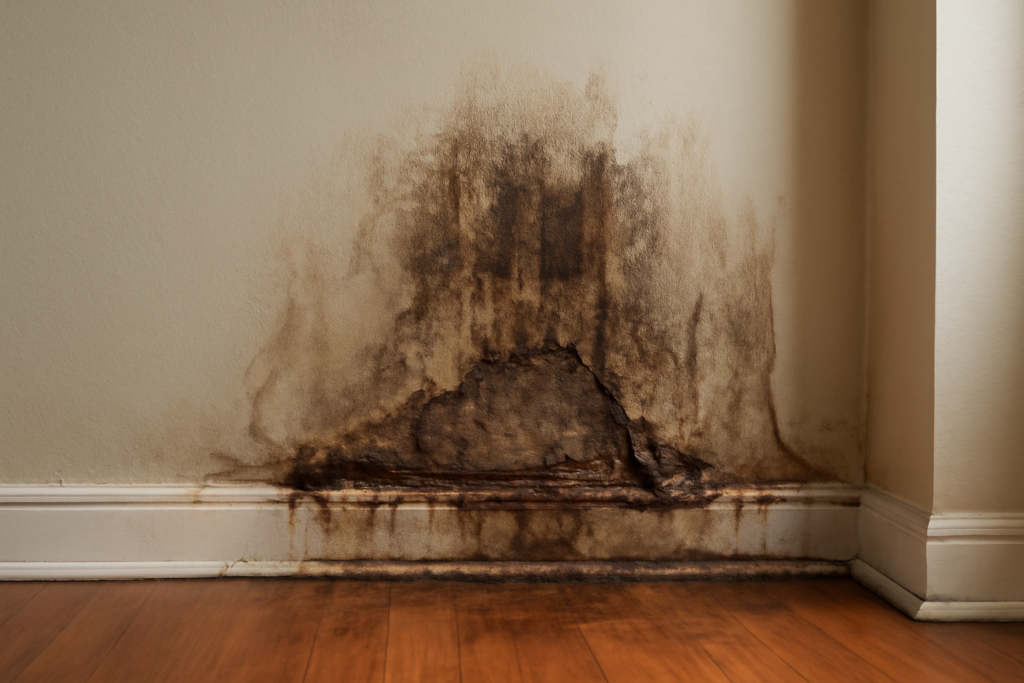
Hidden Water Damage: Don’t Ignore What You Can’t See in Milton, GA
You hear it. A faint drip, drip, drip behind your bedroom wall. Or maybe you notice a discolored patch blooming on the ceiling, spreading slowly. It’s that unsettling feeling when you realize water is where it absolutely shouldn’t be, working its way into your home’s structure. This unseen damage can be much more serious than a surface spill. Left unchecked, it can compromise your home’s integrity and create serious health hazards. We’re here to help you deal with it fast.
Locally, homeowners have trusted us for over 165 five-star reviews to tackle these hidden water issues. They choose us because we understand the science behind drying and restoring walls and structures. You want a team that can pinpoint the source, dry thoroughly, and prevent future problems, and that’s exactly what we focus on with behind wall water damage restoration.
- We use specialized equipment to detect and measure hidden moisture, ensuring we address the full extent of the damage, not just what’s visible.
- Our targeted drying methods prevent further structural compromise and mold growth by removing moisture from within wall cavities and building materials.
- We provide a clear, detailed report of the damage and our restoration plan, so you know exactly what’s happening and what to expect.
The Technical Approach to Drying Walls
When water gets behind your walls, it’s not just about mopping up a spill. It’s about a methodical, scientific approach to extract moisture from materials like drywall, insulation, and wood framing. Improper drying can lead to persistent mold and rot. Our crews are trained to identify the extent of saturation and implement precise drying protocols using advanced equipment. This ensures your home is truly dry, not just superficially so.
1. Inspection and Moisture Mapping
Our first step involves a thorough inspection using advanced tools. We utilize infrared cameras to visualize temperature differences, which often indicate hidden moisture. Moisture meters are then used to take precise readings within wall cavities and surrounding materials. This creates a detailed moisture map, showing us exactly where the water has penetrated and how far it has spread. This mapping is crucial for an effective drying plan.
2. Containment Procedures
To prevent moisture from spreading to unaffected areas, we establish containment zones. This often involves using plastic sheeting and negative air pressure systems. Creating contained environments ensures that the drying process is efficient and that any potential airborne mold spores are kept from migrating. This step is vital for protecting the rest of your property.
3. Targeted Water Extraction
Depending on the situation, we may need to carefully drill small holes in the drywall to access trapped water. We then use specialized equipment, like portable extractors and wet vacs, to remove as much standing water as possible. Removing bulk water quickly is essential to minimize damage and reduce drying times. This process is done with minimal disruption to your home.
4. Advanced Drying Equipment
Once bulk water is removed, we deploy a range of drying equipment. This includes industrial-grade air movers to increase airflow across wet surfaces and dehumidifiers to remove moisture from the air. We may also use specialized equipment like LGR (Low Grain Refrigerant) dehumidifiers for faster, more efficient drying. Strategic equipment placement is key to a successful drying strategy.
5. Monitoring and Verification
Throughout the drying process, we continuously monitor moisture levels. We use our moisture meters to track progress and ensure that materials are drying to industry standards. Verifying dryness is the final critical step before we consider the drying phase complete. We won’t pack up until we’re confident your home is properly dried out.
Don’t let hidden moisture cause long-term problems. Call us today to schedule an immediate inspection. We’ll get your home back to its dry, healthy state.
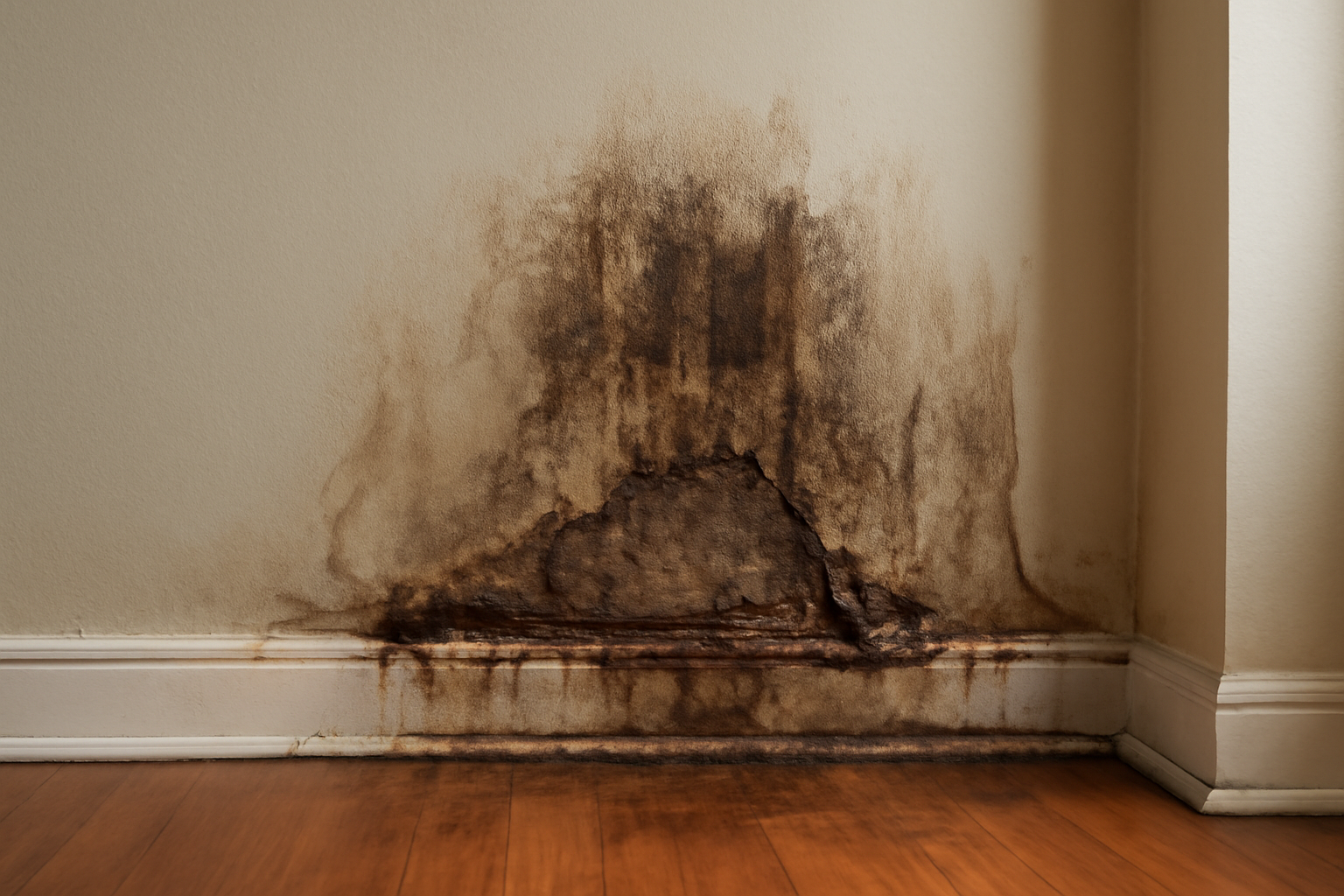
Warning Signs You Need Behind Wall Water Damage Restoration
It’s easy to overlook the subtle signs of water damage when it’s hidden from view. However, catching these indicators early can save you significant money and prevent more extensive structural issues and mold growth. Early detection is key to minimizing the impact on your home.
Musty Odors That Won’t Go Away
One of the most common and earliest indicators of hidden water damage is a persistent musty or earthy smell. This odor often originates from dampness within wall cavities or behind finishes. Unexplained smells are a strong signal that something is wrong.
Discolored or Stained Walls/Ceilings
You might notice new or spreading brown or yellow stains on your drywall or ceiling. These are often water marks, indicating that water has saturated the material. Visible stains are a clear sign of water intrusion that needs immediate attention.
Peeling or Bubbling Paint/Wallpaper
Moisture trapped behind paint or wallpaper can cause it to lose its adhesion. You may see paint peeling away from the surface or wallpaper bubbling up. Deteriorating finishes suggest underlying moisture issues.
Soft or Spongy Drywall
If you press gently on a wall and it feels unusually soft, spongy, or gives way easily, it’s a sign that the drywall has been compromised by water. Compromised materials can quickly lead to structural weakness.
Warped Baseboards or Trim
Water damage can cause wood, like baseboards and trim, to swell and warp. You might notice gaps between the trim and the wall or the wood itself appearing distorted. Damaged wood indicates prolonged exposure to moisture.
Cold Spots on Walls
Sometimes, areas of a wall that feel noticeably colder than surrounding areas can indicate moisture saturation. Water within the wall cavity can draw heat away from the surface. Temperature anomalies might point to hidden wetness.
Behind Wall Water Damage Restoration vs. DIY: When To Call a Professional
| Situation | DIY? | Call a Pro? | Why |
|---|---|---|---|
| Small, isolated drip from a visible pipe fitting | Yes, if you can easily access and repair the fitting. | Yes, if the drip has been ongoing or is in a difficult-to-access area. | Ongoing drips can saturate wall cavities before you see them. |
| Detecting moisture behind a wall with a meter | No. | Yes. | Accurate moisture mapping and professional drying equipment are essential. |
| Musty odors with no visible source | No. | Yes. | This strongly suggests hidden moisture that requires specialized detection. |
| Minor discoloration on a ceiling, no active leak | No. | Yes. | The source needs identification, and the affected materials must be dried and assessed for mold. |
| Water stain that is actively spreading | No. | Yes. | This indicates an active leak that needs immediate repair and professional drying. |
| Concern about mold growth due to past water issues | No. | Yes. | Mold remediation requires specific containment and removal protocols for safety. |
For any situation involving water that has penetrated beyond the surface, calling a professional is almost always the right choice. DIY attempts often fail to fully dry hidden spaces, leading to mold and structural decay. Our team has the specialized tools and expertise to handle behind wall water damage effectively.
Behind Wall Water Damage Restoration Cost In Milton, GA
The cost for behind wall water damage restoration in Milton, GA, can vary significantly. Factors such as the extent of the water intrusion, the size of the affected area, the type of building materials involved, and the necessary drying time all influence the final price. These are general estimates to help you understand the potential investment.
| Service Aspect | Typical Price Range | What Affects Cost |
|---|---|---|
| Initial Inspection and Moisture Mapping | $300 – $800 | Use of advanced equipment like thermal cameras and multiple moisture meters. |
| Water Extraction from Cavities | $500 – $2,000 | Amount of standing water and accessibility of the affected wall sections. |
| Containment Setup | $200 – $700 | Size of the area needing containment and complexity of the setup. |
| Airmover and Dehumidifier Rental (per day) | $50 – $150 | Number of units required and the duration of the drying process. |
| Drying and Monitoring | $1,000 – $4,000+ | Duration of drying needed to reach acceptable moisture content levels. |
| Minor Drywall Repair/Patching (post-drying) | $200 – $1,000 | Size and number of holes needed for drying access and extent of material replacement. |
A precise estimate requires a professional on-site assessment. We offer free estimates so you know exactly what to expect before any work begins.
Service Areas Near Milton, GA
Alpharetta, Roswell, Johns Creek, Cumming, Suwanee, Duluth, Norcross, Marietta, Sandy Springs, Kennesaw, Woodstock, Acworth, Smyrna, Dunwoody, Atlanta, Decatur, Tucker, Lilburn, Buford, Canton.
Common Questions About Behind Wall Water Damage Restoration
What is the first step if I suspect water behind my walls?
The very first step is to stop the source of the water if you can safely do so. If you can’t immediately identify or stop the leak, it’s critical to call a professional restoration team right away. We can perform an immediate inspection using specialized equipment to detect and locate the hidden moisture, even before visible signs appear. Acting fast is key to preventing mold and structural damage.
How long does it take to dry out walls after water damage?
Drying time varies greatly depending on the extent of the water intrusion and the materials affected. It can range from a few days to over a week, sometimes longer. Our team uses advanced drying equipment and protocols to speed up the process safely. We continuously monitor moisture levels to ensure your walls are dried to industry standards before we consider the job complete.
Is behind wall water damage dangerous?
Yes, it can be very dangerous. Trapped moisture creates an ideal environment for mold growth, which can cause significant respiratory issues and allergic reactions. Mold spores can spread throughout your home. Additionally, prolonged water exposure can weaken structural components of your home, leading to instability. We take these risks very seriously and prioritize a thorough, safe drying process.
What kind of equipment do you use to find and dry water behind walls?
We use a variety of professional-grade tools. For detection, we employ infrared cameras to visualize temperature variations indicating moisture and calibrated moisture meters to measure saturation levels in building materials. For drying, we utilize high-powered air movers, LGR dehumidifiers to extract moisture from the air, and sometimes specialized drying equipment for cavity drying. Our equipment is designed for efficient and effective water removal from hidden areas.
How much does behind wall water damage restoration cost?
The cost is highly dependent on the severity and location of the damage, the size of the affected area, and the complexity of the drying process. Factors like the need for containment, the duration of drying, and any necessary minor repairs will influence the final price. We always recommend getting a professional assessment for an accurate quote. We provide detailed estimates after thoroughly inspecting your property.
Check Our Other Relevant Services
Serving Milton, GA And Nearby Areas


