Trusted by 165+ Homeowners
Concrete Water Damage Restoration in Redan, GA
- Over 165 5-Star Reviews
- Free Estimates and Quotes
- 100% Satisfaction Guaranteed
- Child, Family & Pet Safe Steps
- 24-Hour Emergency Service
- Fully Licensed & Insured

Don’t Let Water Ruin Your Foundation: Concrete Water Damage Restoration in Redan, GA
You just noticed it. A damp patch on your basement floor, or worse, water seeping from the concrete walls of your garage. It’s not just a little puddle; it’s a growing concern that smells musty and feels cold. This is concrete water damage, and it needs immediate attention to prevent serious structural issues on your property in Redan, GA. Ignoring it means risking costly structural repairs down the line.
Homeowners around here trust our team with their concrete water damage concerns, evidenced by over 165 five-star reviews. We understand the unique challenges concrete presents when it comes to water intrusion. You’re looking for a team that can not only stop the leak but also restore your concrete’s integrity and dry out the affected areas effectively.
- We use specialized moisture meters to pinpoint hidden water saturation within concrete, ensuring complete drying.
- Our containment methods prevent water and potential mold growth from spreading to other parts of your home.
- We focus on restoring the structural soundness of your concrete, not just the surface appearance.
How We Tackle Concrete Water Damage Restoration
Properly addressing water in concrete isn’t as simple as mopping it up. It requires a technical approach to extract moisture from deep within the porous material and prevent future issues. Our process focuses on scientific drying protocols and advanced equipment to ensure your concrete is dried thoroughly. Cutting corners here can lead to lingering moisture, leading to mold and further damage, so we make sure to follow precise procedures.
1. Initial Assessment and Water Source Identification
Our first step is always a thorough inspection. We use specialized tools to measure moisture levels deep inside the concrete. Identifying the exact source of the water is crucial for effective repair and to prevent recurrence. This assessment helps us create a targeted restoration plan.
2. Water Extraction
Once the source is found and stopped, we begin removing standing water. We utilize powerful pumps and extraction units designed for concrete structures. This process removes the bulk of the visible water quickly, starting the drying process immediately.
3. Moisture Detection and Mapping
After the initial extraction, we use advanced moisture meters, including infrared cameras, to map out all areas where water has penetrated the concrete. This goes beyond what the eye can see, revealing hidden moisture pockets. This detailed mapping ensures we target every damp spot.
4. Dehumidification and Air Movement
We strategically place industrial-grade dehumidifiers and air movers to accelerate the evaporation of moisture from the concrete. These units work tirelessly to draw moisture out of the air and the concrete itself. This controlled environment is key to preventing secondary damage.
5. Drying Verification and Monitoring
Throughout the drying process, we continuously monitor moisture levels. We won’t consider the job done until our readings confirm the concrete has reached a safe, dry standard. This verification ensures your property is truly restored to pre-loss conditions.
Don’t let water damage compromise your concrete foundation or floors. Call us today for a fast, professional assessment and get your property back to normal. We’re ready to help you secure your home.

Warning Signs You Need Concrete Water Damage Restoration
Catching concrete water damage early can save you a significant amount of money and hassle. Your concrete structures might be telling you there’s a problem long before you see a flood. Being aware of these subtle signs is key to proactive property maintenance and preventing more serious structural failures.
Musty Odors That Won’t Go Away
A persistent damp, earthy, or moldy smell, especially in basements or garages, is a strong indicator of trapped moisture. This odor often means water is present within or behind the concrete, creating a breeding ground for mold.
Visible Water Stains or Discoloration
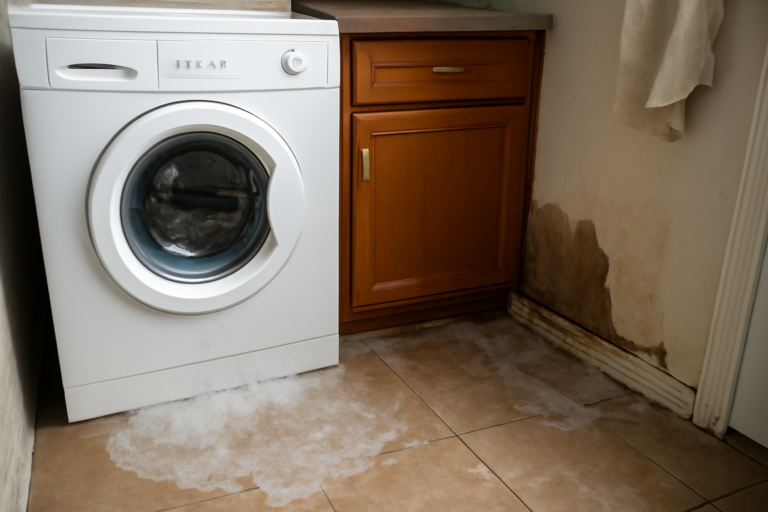
Dark or discolored patches on your concrete walls or floors are direct signs of water intrusion. These stains can appear as rings or spreading marks, showing where water has soaked into the concrete and is slowly wicking upwards.
Efflorescence (White, Powdery Deposits)
When water seeps through concrete and evaporates, it can leave behind white, powdery mineral deposits. This is called efflorescence and it signals that water is actively moving through the concrete, carrying minerals with it. It’s a clear sign of moisture migration.
Cracks and Spalling in Concrete
Water trapped in concrete can freeze and expand, or its presence can weaken the material over time, leading to cracks and spalling (flaking or chipping). These are physical signs that the concrete’s integrity is being compromised by water. You need to address structural weakening immediately.
Damp or Wet Spots on Concrete Surfaces
Beyond just stains, you might feel actual dampness or see standing water on your concrete floors or walls. This is the most obvious sign that water is present and needs immediate attention. Don’t delay when you see actual moisture.
Peeling or Bubbling Paint/Sealant
If you have painted or sealed concrete surfaces, water trapped underneath can cause the coating to bubble up or peel away. This indicates moisture is escaping from the concrete and pushing against the surface layer. It’s a sign of underlying water issues.
Concrete Water Damage Restoration vs. DIY: When To Call a Professional
| Situation | DIY? | Call a Pro? | Why |
|---|---|---|---|
| Small, isolated damp spot on basement floor with no obvious source. | Maybe, for initial cleanup. | Yes | Hidden moisture can spread and cause mold; a pro can detect and dry it fully. |
| Persistent musty odor in the garage but no visible water. | No. | Yes | Odors indicate hidden moisture that needs specialized detection and drying equipment. |
| Water actively seeping from concrete walls in a basement. | No. | Yes | This suggests a significant water intrusion problem requiring source identification and structural drying. |
| White powdery residue (efflorescence) on concrete. | Clean surface residue. | Yes | Efflorescence means water is moving through concrete; a pro can find and fix the source. |
| Slight dampness after a heavy rain that dries within 24 hours. | Yes, monitor closely. | No (initially) | This might be minor surface absorption, but watch for recurrence or worsening signs. |
| Cracking or spalling concrete in areas consistently wet. | No. | Yes | This indicates structural damage caused by water, requiring expert assessment and repair. |
For anything beyond a minor, quickly drying damp spot, calling a professional is the safest bet. Our team has the specialized equipment and knowledge to accurately diagnose and dry concrete structures. We ensure the job is done right, preventing future headaches and protecting your investment.
Concrete Water Damage Restoration Cost In Redan, GA
The cost of concrete water damage restoration in Redan, GA, varies significantly. Factors like the extent of the water damage, the size of the affected area, and the complexity of accessing the concrete play a big role. These price ranges are estimates for what you might expect locally.
| Service | Typical Price Range | What Affects Cost |
|---|---|---|
| Water Extraction from Concrete | $500 – $2,500 | Amount of water, size of area, accessibility of concrete. |
| Moisture Detection & Mapping | $300 – $1,000 | Size of the affected concrete area, complexity of the structure. |
| Industrial Dehumidification & Air Moving | $400 – $1,500 per day | Number of units needed, duration of drying time required. |
| Concrete Sealing (Preventative) | $2 – $7 per sq ft | Type of sealant used, preparation needed for concrete surface. |
| Minor Concrete Crack Repair | $200 – $800 | Length and depth of cracks, type of repair material used. |
| Structural Concrete Drying Protocols | $2,000 – $10,000+ | Severity of saturation, potential for mold growth, structural integrity assessment. |
Getting a precise quote requires an on-site inspection by our trained technicians. We offer free, no-obligation estimates to help you understand the exact cost for your specific situation. Let us provide a clear, upfront assessment.
Service Areas Near Redan, GA
Atlanta, Decatur, Lithonia, Stone Mountain, Tucker, Clarkston, Avondale Estates, Pine Lake, Ellenwood, Conyers, Scottdale, Lilburn, Snellville, Forest Park, Morrow, Riverdale, East Point, Hapeville, College Park, Doraville.
Common Questions About Concrete Water Damage Restoration
My basement concrete floor is wet after a storm. What should I do now?
The first step is to try and identify and stop the water source if possible. Then, remove any standing water. For persistent wetness in concrete, it’s crucial to call professionals immediately to prevent deeper saturation and potential mold growth. Our team can quickly assess the situation and begin the specialized drying process to restore your concrete.
How long does it take to dry out saturated concrete?
Drying time varies greatly depending on the amount of water, the type of concrete, and environmental factors. It can range from a few days to several weeks. We use advanced monitoring equipment to track progress and ensure the concrete is dried to safe levels efficiently. We’ll give you an estimated timeline after our initial assessment.
Is water in concrete dangerous? Can it cause health problems?
Yes, water trapped in concrete can lead to serious health problems, primarily through mold growth. Mold thrives in damp environments and can release spores into the air, causing respiratory issues and allergic reactions. Our process includes steps to not only dry the concrete but also to mitigate mold risks and ensure a healthy environment.
What kind of equipment do you use for concrete water damage restoration?
We employ a range of specialized equipment, including industrial-grade water extractors, powerful air movers, and high-capacity dehumidifiers designed for concrete. We also use advanced moisture meters and thermal imaging cameras to detect and map hidden water. This technology ensures we can effectively remove moisture from deep within the concrete structure.
How can I prevent water damage to my concrete in the future?
Regular maintenance is key. Ensure your gutters are clean and downspouts direct water away from your foundation. Check for cracks in your concrete walls and floors and seal them promptly. Proper grading around your home to slope water away is also vital. We can also advise on waterproofing solutions after restoration.
Check Our Other Relevant Services
Serving Redan, GA And Nearby Areas