Trusted by 165+ Homeowners
Drywall Water Damage Repair in Johns Creek, GA
- Over 165 5-Star Reviews
- Free Estimates and Quotes
- 100% Satisfaction Guaranteed
- Child, Family & Pet Safe Steps
- 24-Hour Emergency Service
- Fully Licensed & Insured

When Water Strikes Your Walls: Drywall Water Damage Repair in Johns Creek, GA
You see it: a dark, spreading stain on your wall. Maybe it’s a soft, spongy spot you can feel with your fingertips, or perhaps a faint, musty smell is starting to fill the air. This isn’t just an eyesore; it’s a clear sign your drywall has absorbed water, and it needs immediate attention. Ignoring this can lead to much bigger, more expensive problems down the road, impacting your home’s structure and your family’s health. We understand how unsettling it is to find this kind of damage in your Johns Creek, GA home, and we’re here to help you navigate it with clear, fast action.
Homeowners around here have trusted us for over 165 five-star reviews because we tackle drywall water damage with a precision that few can match. We know that when water hits your walls, you need more than just a patch-up job. You need a team that understands the science of drying, the risks of mold, and the importance of restoring your home’s integrity. That’s why they call us to handle their drywall water issues effectively.
- We don’t just replace wet drywall; we identify the source of the water and stop it, preventing future damage and saving you money.
- Our technicians use specialized equipment to measure and monitor moisture levels deep within your walls, ensuring a complete and thorough drying process.
- We meticulously handle any potential mold growth, safeguarding your family’s health and your home’s long-term structural soundness.
How We Tackle Your Drywall Water Damage
Dealing with water-damaged drywall requires a systematic approach, not a quick fix. Simply cutting out a section and slapping in a new piece often isn’t enough. If moisture remains trapped behind the new drywall, you’re just delaying the inevitable and creating a breeding ground for mold. Our crews follow strict protocols, utilizing advanced technology to ensure every bit of moisture is removed, and your walls are properly dried and restored to their original condition.
1. Emergency Water Extraction and Containment
First, we stop the water source if it’s ongoing. Then, we use powerful extraction tools to remove as much standing water as possible from the affected area. We also set up containment barriers to prevent further spread of moisture and potential contaminants, which is a critical first step.
2. Moisture Detection and Assessment
This is where our technical expertise really shines. We use advanced moisture meters and thermal imaging cameras to pinpoint exactly how far the water has penetrated your drywall and the underlying structure. This allows us to create a precise drying plan, ensuring we address all affected materials, not just what you can see on the surface. It’s about accurate moisture mapping.
3. Controlled Drying Process
We bring in specialized drying equipment, including high-velocity air movers and dehumidifiers, to rapidly and efficiently dry out the affected materials. We carefully control temperature and humidity levels to speed up evaporation without damaging your home’s structure. This controlled environment is key to preventing secondary damage.
4. Antimicrobial Treatment
Once the area is dry, we apply EPA-approved antimicrobial treatments to inhibit mold and mildew growth. This step is crucial for your family’s health and for ensuring the long-term integrity of your walls. It’s a proactive health measure.
5. Drywall Repair and Restoration
After everything is completely dry and treated, our skilled technicians will repair or replace damaged drywall sections. We then prime and paint to match your existing walls, leaving your home looking and feeling like the water damage never happened. We aim for a flawless visual finish.
Don’t let water-damaged drywall linger. Acting now can save you significant headaches and costs later. Call us today for fast, expert drywall repair.

Warning Signs You Need Drywall Water Damage Repair
Catching water damage early is your best defense against more extensive and costly repairs. Your drywall can tell you a lot if you know what to look for. These signs are your home’s way of signaling a problem that needs professional attention before it escalates into a serious structural issue.
Musty Odors That Won’t Go Away
A persistent damp, musty smell, especially in a specific room or area, is a strong indicator of hidden moisture. This smell often means mold or mildew is beginning to grow behind your walls, which requires immediate professional assessment.
Visible Stains or Discoloration
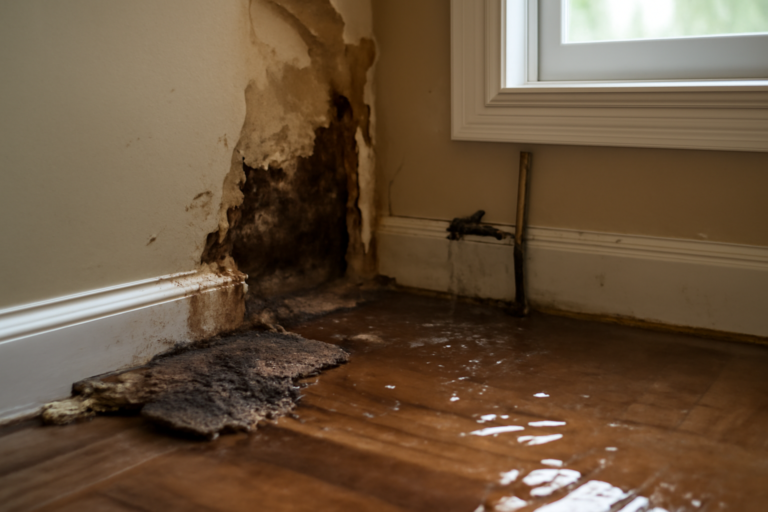
Yellow, brown, or even dark black stains on your drywall are direct evidence of water intrusion. These spots can grow and spread over time, weakening the drywall material itself. Don’t just paint over them; address the underlying water source.
Soft or Spongy Drywall Texture
If you press on a section of your wall and it feels soft, mushy, or gives way easily, the drywall has likely become saturated. This compromised material is no longer structurally sound and needs to be replaced. This is a clear sign of saturation.
Peeling or Bubbling Paint
Water trapped behind paint can cause it to blister, bubble, or peel away from the drywall surface. This is a visual cue that moisture is actively affecting the integrity of your wall finish. It’s a warning your paint is failing.
Warped or Sagging Drywall Panels
When drywall gets too wet, it can absorb water like a sponge, causing the panels to warp, bulge, or even sag downwards. This is a critical sign that the material is severely compromised and its structural integrity is at risk. This indicates significant water saturation.
Cracks or Holes in the Drywall
Water absorption can weaken the paper and gypsum core of drywall, making it more prone to cracking or developing holes. These aren’t just cosmetic issues; they’re entry points for more moisture and potential pests. Address these structural weaknesses promptly.
Drywall Water Damage Repair vs. DIY: When To Call a Professional
| Situation | DIY? | Call a Pro? | Why |
|---|---|---|---|
| Small, fresh leak stain (dime-sized) | Yes | No | Can often be dried with fans and spot-treated. |
| Large, spreading stain (dinner plate-sized or larger) | No | Yes | Indicates deeper saturation requiring professional drying equipment. |
| Soft, spongy drywall feel | No | Yes | Drywall is compromised and needs expert assessment and likely replacement. |
| Musty smell present | No | Yes | Suggests potential mold growth that needs professional containment and treatment. |
| Water source is a plumbing leak | Maybe (if very minor and immediately fixed) | Yes | Risk of hidden pipe damage and ongoing leaks requires expert inspection. |
| Water damage from a major event (burst pipe, roof leak) | Absolutely Not | Yes | Extensive saturation needs specialized drying and restoration protocols. |
While minor water spots might seem manageable, the reality is that drywall water damage often hides deeper issues. For anything beyond a very small, fresh stain, calling a professional is the safest bet to ensure a complete, healthy, and lasting repair. We provide the technical expertise needed.
Drywall Water Damage Repair Cost In Johns Creek, GA
The cost for drywall water damage repair in Johns Creek, GA can vary widely, depending on the size of the affected area, the extent of the water damage, and the complexity of the repair. These price ranges are estimates for typical scenarios. We always provide a detailed on-site estimate before any work begins.
| Service Aspect | Typical Price Range | What Affects Cost |
|---|---|---|
| Minor Drywall Patching (under 2 sq ft) | $250 – $750 | Complexity of patch, texture matching, and priming. |
| Moderate Drywall Section Replacement (2-10 sq ft) | $750 – $2,500 | Extent of damage, need for structural support, and paint matching. |
| Large Area Drywall Repair (over 10 sq ft) | $2,500 – $7,500+ | Significant structural repair, extensive drying, and potential mold remediation. |
| Moisture Detection & Assessment | $200 – $500 | Use of advanced equipment like thermal cameras and multiple moisture meters. |
| Controlled Drying & Dehumidification | $500 – $2,000+ (per day/unit) | Size of area, duration of drying needed, and number of machines required. |
| Antimicrobial Treatment | $300 – $1,000+ | Size of the affected area and type of treatment applied. |
It’s important to remember that these figures are estimates. A thorough assessment of your specific situation is necessary for an accurate quote. We offer free, no-obligation estimates for all drywall water damage repairs.
Service Areas Near Johns Creek, GA
Alpharetta, Suwanee, Duluth, Norcross, Sandy Springs, Roswell, Milton, Cumming, Buford, Marietta, Atlanta, Tucker, Lilburn, Peachtree Corners, Doraville, Dunwoody, Chamblee, John’s Creek, Berkeley Lake, Dawsonville.
Common Questions About Drywall Water Damage Repair
How quickly does drywall need to be repaired after water damage?
The faster, the better. Ideally, you should contact us within 24-48 hours of discovering water damage. The longer wet drywall sits, the more it weakens, and the higher the risk of mold growth. We prioritize rapid response to prevent further damage and begin the drying process.
Will insurance cover my drywall water damage repair?
In many cases, yes, especially if the damage is sudden and accidental, like a burst pipe. However, coverage can depend on the cause of the water intrusion and your specific policy. We can help document the damage for your insurance claim, providing the necessary reports and estimates.
How long does the drywall drying process take?
The drying process can vary significantly, typically taking anywhere from 24 hours to several days. It depends on the amount of water, the materials affected, and ambient humidity. Our technicians use advanced equipment to monitor progress and ensure the area is completely dry before repair.
What are the health risks associated with untreated water-damaged drywall?
The primary health risk is mold and mildew growth, which can release spores into the air. Inhaling these spores can trigger allergies, asthma, and other respiratory issues, especially in sensitive individuals. We use effective antimicrobial treatments to prevent mold and ensure your home is safe.
Can you really dry out drywall without replacing it?
Sometimes, yes. If the drywall is not severely saturated, warped, or showing signs of mold, our advanced drying techniques can often restore it. We use specialized equipment to draw moisture out of the material and the surrounding structures, preventing the need for full replacement in many cases. This technical drying approach saves you money.
Check Our Other Relevant Services
- Ceiling Drywall Water Damage Restoration in Johns Creek, GA
- Bathtub Overflow Cleanup in Johns Creek, GA
Serving Johns Creek, GA And Nearby Areas