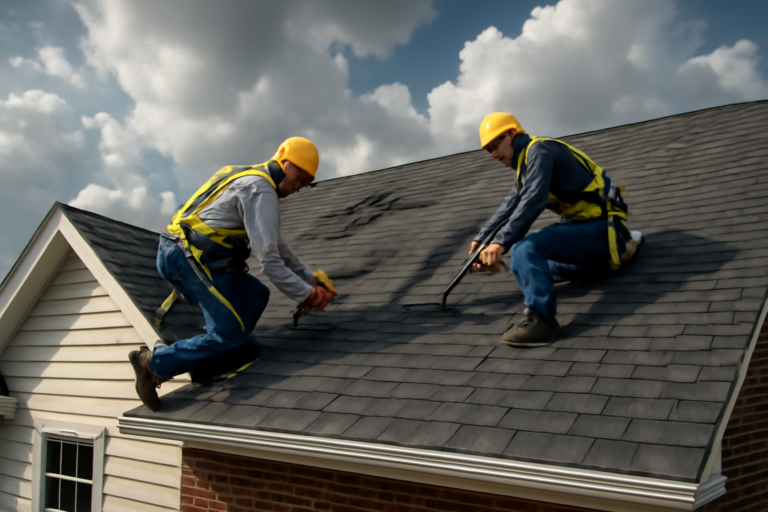
Trusted by 165+ Homeowners
Emergency Tarping Services in Smyrna, GA
- Over 165 5-Star Reviews
- Free Estimates and Quotes
- 100% Satisfaction Guaranteed
- Child, Family & Pet Safe Steps
- 24-Hour Emergency Service
- Fully Licensed & Insured

Don’t Let a Hole in Your Roof Ruin Your Day
There’s nothing quite like seeing daylight through your ceiling after a storm. It’s a jarring sight that signals immediate trouble, and you need to act fast. If you’ve experienced roof damage, especially from high winds or falling debris, the most critical first step is to protect your interior from further water intrusion. Ignoring this can lead to much more extensive and costly damage inside your home, affecting drywall, insulation, and even your electrical systems. This is why having a reliable emergency tarping service ready is so important for homeowners in Smyrna, GA, and surrounding areas.
We’ve earned the trust of over 165 homeowners in the area, with many leaving five-star reviews about our rapid response and effective emergency tarping. When your property is vulnerable, you want a team that understands the urgency and has the right equipment to secure it quickly. Our local crews are dedicated to providing a swift and professional response, minimizing the stress and preventing secondary damage from rain or sun. You’ll find our approach is direct, honest, and focused on getting your home protected as quickly as possible.
- Immediate protection from the elements, preventing further water damage to your home’s interior structure and belongings.
- A temporary but crucial barrier that buys you valuable time to arrange for permanent roof repairs without added stress.
- Expert application of durable materials designed to withstand various weather conditions, ensuring your property stays secure until permanent fixes are made.
How Our Emergency Tarping Process Works
When you call us for emergency tarping, you’re getting a team that follows a proven, methodical process. We understand that in these situations, every minute counts, and a rushed or improper tarping job can create more problems than it solves. Our crews are trained to assess the damage efficiently and deploy the correct materials and techniques to create a robust, temporary seal. This careful approach ensures your roof is protected from further harm, giving you the breathing room needed for permanent repairs. We’ve seen firsthand how delays can escalate costs, which is why our response is always prompt and thorough.
Initial Damage Assessment
Upon arrival, our trained technicians will conduct a quick but thorough visual inspection of the damaged roof area from a safe vantage point. We identify the extent of the breach and note any immediate hazards to ensure our safety and yours. This step helps us determine the best materials and approach for effective protection.
Material Selection and Preparation
We use heavy-duty, weather-resistant tarps specifically designed for roofing emergencies, along with specialized fasteners and securing methods. Our team selects the appropriate size and type of tarp to cover the affected area completely. This ensures a strong, reliable shield against rain and wind.
Secure Tarp Installation
Our crews meticulously secure the tarp to the undamaged portions of your roof, ensuring it’s taut and free from loose edges. We use techniques that won’t cause additional damage to your shingles or underlying structure. This is key to preventing wind uplift and water pooling.
Perimeter Drainage and Securing
Proper water diversion is crucial. We ensure that any water that might hit the tarp is channeled away from your home’s foundation. This involves carefully placing and securing the tarp’s edges to promote runoff and prevent water from accumulating and seeping underneath.
Final Inspection and Client Walkthrough
Before we leave, we conduct a final inspection to confirm the tarp is securely in place and effectively covering the damage. We’ll walk you through what we’ve done, explain how the tarp is secured, and answer any immediate questions you might have. You’ll know your home is protected for now.
Don’t wait for the next rain shower to assess your roof damage. Call us immediately if you suspect a breach to prevent costly secondary issues.

Warning Signs You Need Emergency Tarping Services
Catching roof damage early is the best way to save yourself significant headaches and expenses down the line. Sometimes the signs are obvious, like a tree limb on your roof, but other times they can be subtle. Recognizing these indicators promptly allows you to secure your home before minor issues become major disasters. Ignoring these signs can lead to widespread water damage, mold growth, and structural compromise, all of which are far more expensive to fix.
Visible Holes or Missing Shingles
If you can see daylight through your roof or notice large sections of missing shingles, your interior is exposed. This is a clear sign that immediate tarping is necessary to prevent water from entering your attic and home.
Large Water Stains on Ceilings or Walls
The appearance of new, spreading water stains is a direct indicator of a leak. These stains mean water is actively penetrating your roof and ceiling materials, and prompt tarping can stop the damage from worsening.
Sagging Ceiling Areas
A sagging ceiling often means water has saturated the insulation and drywall, creating a potential collapse risk. This serious sign demands urgent professional attention to prevent a cave-in and further water damage.
Damage from Falling Debris
Following severe storms or high winds, check for any signs of impact from falling branches or other debris. Even small-looking holes can allow significant amounts of water in, so swift tarping is essential.
Torn or Lifted Shingles
High winds can lift or tear shingles, creating gaps for water to enter. If you see shingles that are peeling back or look damaged, don’t delay calling for help to get them covered.
Emergency Tarping Services vs. DIY: When To Call a Pro
| Situation | DIY? | Call a Pro? | Why |
|---|---|---|---|
| Minor shingle uplift, no visible leaks | Yes, if you have the right ladder and safety gear. | Small issues can sometimes be addressed temporarily with caution. | |
| Large hole from falling debris | Yes, absolutely. | This is dangerous work, and the hole is too large for a simple DIY fix. | |
| Significant storm damage with widespread shingle loss | Yes, definitely. | The scale of damage requires professional assessment and heavy-duty materials. | |
| Visible sagging in the roof or ceiling | Yes, critical. | This indicates structural compromise and potential collapse risk. | |
| Need to tarp immediately before rain hits | Yes, highly recommended. | Professionals have the speed, equipment, and experience for rapid deployment. | |
| Concerned about safety or working at heights | Yes, always. | Your safety is paramount; leave dangerous tasks to trained technicians. |
For situations involving significant damage, safety concerns, or the immediate threat of rain, calling a professional for emergency tarping is always the smartest choice. Our team is equipped to handle these urgent scenarios efficiently and safely, ensuring your home receives the protection it needs. Getting professional help quickly is key to preventing much larger repair bills later on.
Emergency Tarping Services Cost In Smyrna, GA
The cost of emergency tarping can vary significantly depending on the size of the damaged area, the complexity of your roof, and how quickly we need to respond. These estimates are meant to give you a general idea of what to expect for services in the Smyrna, GA area. A thorough on-site inspection is always needed for an accurate quote. Factors like roof pitch, accessibility, and the type of materials required will influence the final price.
| Service | Typical Price Range | What Affects Cost |
|---|---|---|
| Small Area Tarping (e.g., single shingle breach) | $500 – $1,000 | Accessibility and time of day. |
| Medium Area Tarping (e.g., several square feet of damage) | $1,000 – $2,500 | Roof pitch, number of fasteners needed, and material size. |
| Large Area Tarping (e.g., significant storm damage) | $2,500 – $5,000+ | Extent of damage, complexity of rooflines, and specialized securing methods. |
| Emergency Response Fee (after hours/weekends) | Included in estimate or added | Urgency of the call and time of day/week. |
| Material Costs (heavy-duty tarps, fasteners) | Included in service price | Quality and quantity of materials required for a secure seal. |
| Additional Securing (e.g., bracing for high winds) | May incur extra charges | Specific structural needs to withstand severe weather. |
Remember, these are approximate figures. We provide free, detailed estimates after assessing your specific situation, ensuring you understand all costs involved before we begin any work.
Service Areas Near Smyrna, GA
Marietta, Acworth, Kennesaw, Woodstock, Roswell, Sandy Springs, Dunwoody, Atlanta, Decatur, Avondale Estates, Tucker, Clarkston, Stone Mountain, Lithonia, Conyers, Stockbridge, Jonesboro, Forest Park, Riverdale, College Park.
Common Questions About Emergency Tarping Services
What is the first thing I should do if my roof is damaged?
The very first thing you should do is ensure everyone in your household is safe and away from any areas of suspected damage. Then, if it’s safe to do so, try to assess the damage from the ground or a secure window. Your next crucial step is to call a professional emergency tarping service to prevent further water intrusion. We can be there quickly to secure your property.
How long does emergency tarping usually take?
For most standard roof breaches, our team can typically complete the tarping process within 1 to 3 hours of arrival, assuming safe working conditions and immediate access. The exact time depends on the size and complexity of the damage, as well as the pitch and accessibility of your roof. We work efficiently to restore your home’s protection as swiftly as possible.
Will my homeowner’s insurance cover emergency tarping?
In many cases, emergency tarping services are covered by homeowner’s insurance policies as a measure to prevent further damage. It’s always best to check your specific policy details. We can assist you by providing detailed documentation and estimates that you can submit to your insurance provider to expedite your claim process.
What kind of materials do you use for emergency roof tarps?
We use industrial-grade, heavy-duty tarps made from durable materials like reinforced vinyl or polyethylene, designed to withstand harsh weather conditions. These aren’t your average tarps; they are specifically chosen for their strength, tear resistance, and waterproofing capabilities. Our team also uses specialized fasteners and securing techniques to ensure the tarp stays in place and provides reliable, long-term protection.
Can I do emergency tarping myself to save money?
While the desire to save money is understandable, attempting DIY emergency tarping can be extremely dangerous. Working on a damaged roof, especially at heights and potentially in unstable conditions, carries significant risks of falls and serious injury. Furthermore, improper installation can lead to more damage or the tarp failing during severe weather. For your safety and the integrity of your home, it’s always best to trust our trained technicians for this critical service.
Check Our Other Relevant Services
Serving Smyrna, GA And Nearby Areas