Trusted by 165+ Homeowners
Floor Water Damage Restoration in Sandy Springs, GA
- Over 165 5-Star Reviews
- Free Estimates and Quotes
- 100% Satisfaction Guaranteed
- Child, Family & Pet Safe Steps
- 24-Hour Emergency Service
- Fully Licensed & Insured

Don’t Let Water Ruin Your Floors in Sandy Springs, GA
You walk into your living room this morning and see it – that disturbing sheen of water spreading across your beautiful hardwood, the soggy carpet in the den, or maybe a warped tile floor you just had installed. You can even smell that faint, unsettling dampness in the air. It’s a sinking feeling, and you know immediate action is critical to save your flooring. This isn’t just a little spill; it’s water damage that needs expert attention right now before it gets worse. We understand how stressful discovering this can be in your Sandy Springs, GA home.
Our local crews have helped hundreds of homeowners in the area deal with exactly this situation. We’ve earned over 165 five-star reviews because we focus on getting your floors dry and restored efficiently. You can trust us to handle your property with care and bring your home back to normal. We’re the team that neighbors recommend for fast, reliable floor drying and repair.
- We use advanced moisture meters and thermal imaging to pinpoint hidden water that you can’t see, ensuring every drop is accounted for.
- Our specialized drying equipment is designed to extract water from deep within floor structures, preventing long-term issues like mold growth and structural compromise.
- We focus on restoring your specific flooring type, whether it’s delicate hardwood, plush carpet, or sensitive laminate, using the right techniques for each.
The Science of Drying Your Floors
When water infiltrates your floors, it doesn’t just sit on the surface. It seeps into subfloors, padding, and the very fibers of your carpet. Simply mopping up isn’t enough; you need a scientific approach to properly extract and evaporate this moisture. Our team follows strict drying protocols, using powerful equipment to create controlled environments that accelerate drying without causing further damage. Ignoring these steps can lead to costly secondary problems, so we emphasize a thorough, technical process for complete moisture removal.
Step 1: Initial Water Extraction
The first thing we do is remove the bulk of the standing water. We use industrial-grade water extractors and powerful submersible pumps to quickly pull out as much liquid as possible. This step is crucial for preventing further saturation and damage to your subfloor and flooring materials. We work to remove visible water as fast as we can.
Step 2: Moisture Detection and Assessment
Once the standing water is gone, we use specialized tools like penetrating moisture meters and infrared cameras. These tools help us identify exactly how far the water has spread and how deeply it has penetrated your flooring and subfloor. This detailed assessment allows us to create a targeted drying plan for your specific situation, ensuring no hidden moisture remains.
Step 3: Controlled Drying Environment
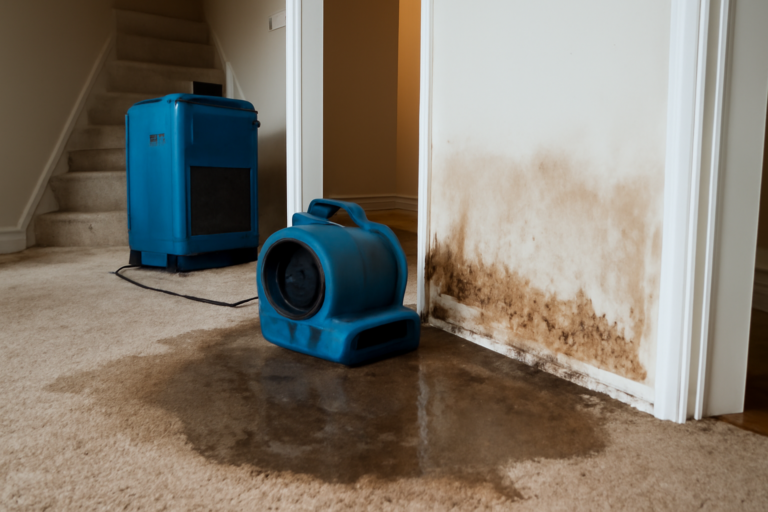
We set up powerful air movers and dehumidifiers to create an optimal drying environment. These machines work together to increase air circulation and remove moisture from the air and materials. By controlling temperature and humidity levels, we can significantly speed up the drying process and prevent secondary damage, like mold or mildew growth, ensuring your floors dry properly.
Step 4: Containment and Air Filtration
If necessary, we’ll use containment systems to isolate the affected area. This prevents moist air from spreading to other parts of your home and stops potential contaminants from circulating. We also use high-efficiency air scrubbers with HEPA filters to capture airborne particles and improve indoor air quality throughout the drying process, promoting a healthier home environment.
Step 5: Final Moisture Readings and Restoration
Before we consider the job done, we take final moisture readings to confirm that your floors and subfloors have returned to their normal moisture content. Once we’re confident the area is completely dry, we can proceed with any necessary repairs or replacement of flooring materials. Our goal is to get you back to pre-water damage conditions.
Don’t wait for water damage to spread. Call our team today for a rapid response to your floor water issues. We’re ready to deploy our specialized equipment and expertise to save your floors now.

Warning Signs You Need Floor Water Damage Restoration
Catching water damage early is key to minimizing expense and preventing long-term problems. Your floors can show subtle signs that something is wrong, even if you can’t see standing water. Recognizing these indicators means you can call for professional help before minor issues become major disasters, saving you significant repair costs down the line.
Musty Odors That Won’t Go Away
A persistent damp, musty, or mildewy smell, especially when the air is still, is a strong indicator of hidden moisture. This odor often means mold or mildew is beginning to grow in the subfloor or padding. Ignoring this smell can lead to serious indoor air quality issues.
Warping or Buckling Floors
Wood floors can swell and warp when exposed to moisture. If you notice planks lifting, curving, or becoming uneven, it’s a clear sign that water has penetrated the material. This is a critical indicator that immediate drying is required.
Soft or Spongy Carpet
When you step on a carpeted area and it feels unusually soft, spongy, or gives way easily, it’s likely the carpet padding underneath is saturated. This indicates that water has soaked through the carpet and into the padding, and may have reached the subfloor. You need professional moisture extraction.
Stains or Discoloration on Flooring
Water can leave behind mineral deposits or cause dyes in carpet and wood to bleed, resulting in visible stains or discoloration. These marks can appear on the surface of your flooring or even transfer to adjacent materials. These are visible signs of water intrusion and damage.
Peeling or Loose Flooring Adhesives
For vinyl, tile, or laminate flooring, water can weaken the adhesives holding them in place. If you start seeing edges lifting, tiles coming loose, or sections of vinyl peeling up, it’s a sign that moisture has compromised the bond. This requires prompt attention to the adhesive failure.
Warm Spots on the Floor
If you have radiant floor heating and notice unusually warm spots, it could indicate a leak. Water trapped beneath the flooring can interfere with heat distribution, creating these hot zones. This is a sign of a potential plumbing issue that needs investigation.
Floor Water Damage Restoration vs. DIY: When To Call a Professional
| Situation | DIY? | Call a Pro? | Why |
|---|---|---|---|
| Small spill on tile or vinyl | Yes | No | Easy to wipe up and dry with fans. |
| Saturated carpet from a small spill | Maybe | Yes | Professional extractors get more water out, preventing subfloor damage. |
| Water damage from a burst pipe or major leak | No | Yes | Extensive water requires specialized equipment and expertise. |
| Hidden moisture in subflooring | No | Yes | Only professional tools can detect and dry hidden moisture effectively. |
| Mold or mildew starting to form | No | Yes | Professionals have safety protocols and specialized cleaning agents. |
| Warped or buckling hardwood floors | No | Yes | Structural damage needs expert assessment and potentially replacement. |
While small spills might be manageable with basic cleanup, anything more significant requires professional intervention. When water has soaked into carpets, subfloors, or structural elements, you need the specialized equipment and knowledge our team brings. Trusting a professional ensures thorough drying and prevention of future problems.
Floor Water Damage Restoration Cost In Sandy Springs, GA
The cost of floor water damage restoration in Sandy Springs, GA can vary widely. Factors like the size of the affected area, the type of flooring, the depth of water intrusion, and the presence of secondary damage all play a role. These figures are estimates and a proper on-site assessment is needed for an accurate quote.
| Service | Typical Price Range | What Affects Cost |
|---|---|---|
| Water Extraction (per sq ft) | $0.50 – $2.50 | Amount of water, accessibility, and type of flooring. |
| Carpet Drying & Deodorizing | $300 – $1,500 | Size of the area, saturation level, and need for padding replacement. |
| Hardwood Floor Drying | $800 – $3,000+ | Severity of warping, need for subfloor drying, and potential for board replacement. |
| Subfloor Moisture Removal | $500 – $2,000 | Depth of water, accessibility under the floor, and size of the affected area. |
| Mold Remediation (if needed) | $750 – $3,500+ | Extent of mold growth, type of surface affected, and containment needs. |
| Flooring Repair/Replacement | Varies | Type of flooring, cost of materials, and labor involved. |
Exact pricing depends on a detailed assessment of your specific situation. We offer free estimates to give you a clear understanding of the costs involved. Contact us today to schedule your free, no-obligation estimate.
Service Areas Near Sandy Springs, GA
Atlanta, Roswell, Dunwoody, Marietta, Alpharetta, Johns Creek, Norcross, Duluth, Chamblee, Doraville, Smyrna, Vinings, Tucker, Lilburn, Suwanee, Peachtree Corners, Acworth, Kennesaw, Woodstock, Canton.
Common Questions About Floor Water Damage Restoration
What should I do immediately after discovering water damage on my floors?
First, try to stop the source of the water if it’s safe to do so. If it’s a burst pipe, turn off the main water supply. Then, remove as much standing water as possible using towels or a wet/dry vacuum. Open windows and use fans to begin air circulation. However, for significant water intrusion, it’s best to call our team immediately. We can begin the professional drying process to prevent further damage.
How long does it take to dry out wet floors?
The drying time can vary significantly, typically ranging from 24 hours to several days. Factors like the type of flooring, how much water is present, and the humidity levels in your home play a big role. Our advanced equipment works to speed up the process, but we always ensure floors are completely dry to industry standards before we finish.
Is floor water damage expensive to fix?
The cost depends heavily on the extent of the damage and the type of flooring. Minor spills can be relatively inexpensive to address. However, extensive saturation that affects subflooring, requires mold remediation, or necessitates floor replacement can become quite costly. Acting quickly with professional help can often reduce the overall repair expenses.
Will my insurance cover floor water damage restoration?
Often, yes. Most homeowner’s insurance policies cover water damage caused by sudden and accidental events like burst pipes or appliance malfunctions. Damage from slow leaks or lack of maintenance might not be covered. We can work with your insurance adjuster to ensure all necessary work is documented and that you receive the coverage you’re entitled to for your floor water damage claim.
How can I prevent future floor water damage?
Regular maintenance is key. Inspect appliances like washing machines and dishwashers for leaky hoses. Check plumbing under sinks and around toilets for any signs of leaks. Ensure your roof and gutters are in good repair to prevent water from entering your home from above. For basement areas, consider a sump pump. These preventative steps can help avoid costly water damage incidents.
Check Our Other Relevant Services
Serving Sandy Springs, GA And Nearby Areas