Trusted by 165+ Homeowners
Subfloor Water Damage Repair in Buford, GA
- Over 165 5-Star Reviews
- Free Estimates and Quotes
- 100% Satisfaction Guaranteed
- Child, Family & Pet Safe Steps
- 24-Hour Emergency Service
- Fully Licensed & Insured

Don’t Let Your Floors Sink: Expert Subfloor Water Damage Repair in Buford, GA
Did you know that over 60% of water damage claims involve hidden moisture, like what lurks beneath your floors? That’s a staggering number that most homeowners don’t consider until it’s too late. This hidden damage can quietly compromise your home’s foundation and air quality. Addressing subfloor water damage promptly is crucial for preventing more significant structural issues. You need a team that understands the urgency and complexity of these situations right here in Buford, GA.
Our local community trusts us with their homes because we deliver tangible results, backed by over 165 five-star reviews. Homeowners around here choose us specifically for subfloor water damage repair because we’re known for our meticulous approach and transparent communication. We understand that dealing with water issues is stressful, and we aim to make the repair process as smooth as possible for your property.
- We thoroughly inspect the affected subfloor area using advanced moisture meters to pinpoint the exact extent of water intrusion, ensuring no spot is missed.
- Our team specializes in drying and dehumidifying enclosed spaces, like crawl spaces and under-slab areas, to prevent mold growth and further deterioration.
- We provide detailed documentation for insurance claims, making the claims process easier for you by clearly outlining the damage and the necessary repairs.
How Subfloor Water Damage Repair Actually Works
A proper subfloor water damage repair process is more than just mopping up a spill. It involves a systematic approach to identify the source, remove standing water, dry materials to safe levels, and restore the affected area. Cutting corners here can lead to persistent mold issues, structural weakening, and recurring problems that cost you more in the long run. We follow a proven protocol to ensure your home is safe and sound.
1. Initial Assessment and Water Source Identification
The first step is always identifying how the water got there. Our technicians will carefully inspect for leaks in plumbing, appliance failures, foundation cracks, or drainage issues. Pinpointing the exact source prevents future recurrence. This assessment usually takes between 1 to 3 hours, depending on the complexity.
2. Water Extraction
Once the source is stopped, we immediately begin removing standing water. We use powerful submersible pumps and specialized extraction equipment to remove bulk water efficiently. Rapid water removal is critical to minimizing damage. This phase can range from a few hours to a full day for larger areas.
3. Drying and Dehumidification
This is where we tackle the hidden moisture. We deploy industrial-grade air movers and dehumidifiers to draw moisture out of the subfloor, joists, and surrounding materials. Controlled drying environments are key to preventing mold. This process can take several days, sometimes up to a week or more, depending on the saturation level.
4. Mold Prevention and Remediation
If mold has already begun to form, or if conditions are ripe for it, we address it. This might involve antimicrobial treatments or, in severe cases, careful removal of contaminated materials. Preventing mold growth protects your family’s health. This step’s duration depends on the extent of the mold present.
5. Subfloor Repair and Restoration
After everything is dry and safe, we repair or replace damaged subfloor materials, joists, or underlayment as needed. We then prepare the area for your flooring to be reinstalled. Restoring structural integrity is our final goal. The time for this step varies greatly based on the damage severity.
Don’t let water damage fester beneath your floors. Contact us today to get a thorough inspection and start the repair process. Taking immediate action can save you significant future costs and headaches.

Warning Signs You Need Subfloor Water Damage Repair
Catching subfloor water damage early can make a world of difference in repair costs and effort. Ignoring subtle signs often leads to much larger, more expensive problems down the line. Your home is signaling issues, and it’s important to listen to what it’s telling you.
Musty Odors That Won’t Go Away
A persistent damp, musty smell, especially noticeable when you’re near the floors or in lower levels of your home, is a strong indicator of hidden moisture. Persistent odors often signal mold or mildew growth within the subfloor structure.
Warped or Soft Flooring
If your hardwood floors are cupping or buckling, or if vinyl or carpet feels soft and spongy underfoot, it’s a clear sign that moisture is affecting the subfloor. Visible flooring changes are usually a later-stage indicator.
Stains or Discoloration on Floors or Walls
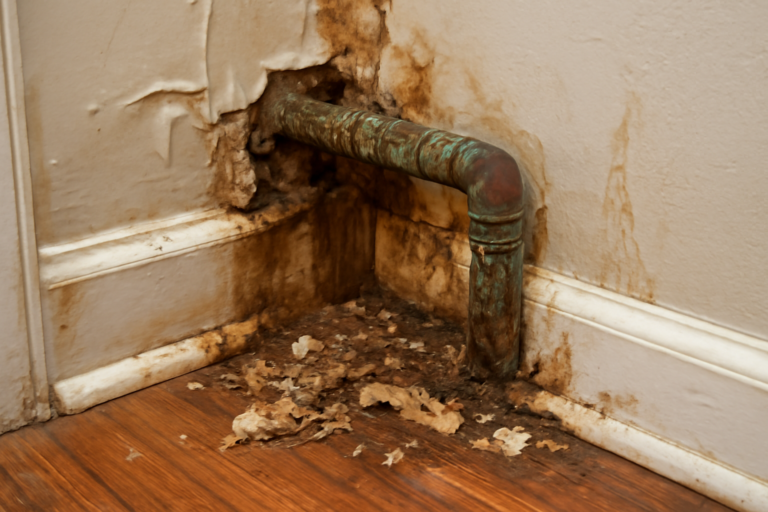
Water stains appearing on your flooring, baseboards, or even the lower parts of your walls can indicate water wicking up from below. Unexplained stains often trace back to a subfloor moisture problem.
Increased Humidity Levels Indoors
If your home feels unusually humid, even with air conditioning running, it could be due to excessive moisture evaporating from the subfloor and crawl space. Elevated indoor humidity affects comfort and air quality.
Sounds of Dripping or Squishing
In some cases, you might actually hear sounds of water moving or squishing when you walk on certain areas of your floor. Audible water sounds mean there’s significant standing water present.
Cracks or Gaps in the Subfloor
As wood absorbs moisture and then dries, it can swell and shrink, leading to cracks or gaps in the subfloor itself. Subfloor structural changes are a serious concern.
Subfloor Water Damage Repair vs. DIY: When To Call a Professional
| Situation | DIY? | Call a Pro? | Why |
|---|---|---|---|
| Minor spill on hard surface subfloor (e.g., concrete slab) | Yes | No | Easy to wipe up and air dry. |
| Small leak from a pipe under a wooden subfloor, visible and contained | Maybe | Yes | Requires specialized drying equipment to ensure complete moisture removal. |
| Suspected mold growth in a crawl space | No | Yes | Requires containment and specific safety protocols to avoid health risks. |
| Widespread water saturation affecting multiple rooms | No | Yes | Needs industrial-grade drying and potential structural assessment. |
| Foundation crack allowing water intrusion | No | Yes | Requires professional assessment and repair of the foundation itself. |
| Any situation where the water source is unclear | No | Yes | Accurate source identification is crucial to prevent recurrence. |
While small, isolated spills might be manageable yourself, anything involving standing water, potential mold, or structural concerns under your floors definitely warrants professional attention. Trusting your instincts is important; if it feels beyond a simple cleanup, it probably is.
Subfloor Water Damage Repair Cost in Buford, GA
The cost for subfloor water damage repair in Buford, GA, can vary significantly. Several factors influence the final price, including the size of the affected area, the type of subfloor material, the severity of the water damage, and whether mold remediation is necessary. These figures are estimates to give you an idea.
| Service | Typical Price Range | What Affects Cost |
|---|---|---|
| Water Extraction (up to 500 sq ft) | $500 – $1,500 | Amount of water and accessibility of the area. |
| Structural Drying (e.g., crawl space, under slab) | $1,000 – $3,500 | Size of the space and duration of drying needed. |
| Subfloor Repair/Replacement (per sq ft) | $5 – $20 | Type of subfloor (plywood, OSB, concrete) and extent of damage. |
| Mold Testing and Remediation | $750 – $4,000+ | Severity and spread of mold growth. |
| Antimicrobial Treatments | $200 – $800 | Size of the treated area and type of treatment. |
| Moisture Monitoring and Reporting | $300 – $700 | Number of monitoring points and frequency of checks. |
A precise estimate can only be provided after a thorough on-site assessment by our trained technicians. We offer free, no-obligation estimates for all subfloor water damage concerns. Getting an accurate quote is the first step toward a solution.
Service Areas Near Buford, GA
Suwanee, Sugar Hill, Flowery Branch, Oakwood, Gainesville, Cumming, Johns Creek, Duluth, Lawrenceville, Snellville, Norcross, Lilburn, Tucker, Chamblee, Doraville, Sandy Springs, Roswell, Milton, Alpharetta, Marietta.
Common Questions About Subfloor Water Damage Repair
What if I have water under my concrete slab subfloor?
Water under a concrete slab subfloor is a serious issue that often requires specialized techniques. We use advanced methods like sub-slab vapor barriers and industrial-grade drying equipment to address moisture trapped beneath the concrete. Identifying the entry point is critical to preventing future problems. We can assess the situation and provide a clear plan for your Buford, GA home.
How long does subfloor water damage repair usually take?
The timeline varies greatly, but a typical subfloor water damage repair project can take anywhere from a few days to two weeks. This includes water extraction, thorough drying, and any necessary repairs. Expedited drying processes are our priority. We’ll give you a more specific timeline after our initial assessment.
Will my homeowner’s insurance cover subfloor water damage?
Often, yes, but it depends on the cause of the water damage. Standard policies typically cover sudden and accidental events like burst pipes. Damage from poor maintenance or gradual leaks might be excluded. We work closely with insurance adjusters to help document the damage and streamline your claim process.
What are the health risks associated with subfloor water damage?
The primary health risk is mold and mildew growth, which can release spores into your home’s air. Inhaling these spores can trigger allergies, asthma symptoms, and other respiratory issues. Protecting your family’s health is paramount. Our team ensures thorough drying and remediation to prevent these dangerous conditions.
How can I prevent subfloor water damage in the future?
Regular maintenance is key. This includes checking plumbing for leaks, ensuring proper grading around your foundation, cleaning gutters, and promptly addressing any appliance leaks. Proactive home maintenance can prevent costly repairs. We can also advise on specific preventative measures for your property.
Check Our Other Relevant Services
- Gutter Overflow Water Damage Restoration in Buford, GA
- Emergency Water Damage Services in Buford, GA
Serving Buford, GA And Nearby Areas