Trusted by 165+ Homeowners
Subfloor Water Damage Repair in Stone Mountain, GA
- Over 165 5-Star Reviews
- Free Estimates and Quotes
- 100% Satisfaction Guaranteed
- Child, Family & Pet Safe Steps
- 24-Hour Emergency Service
- Fully Licensed & Insured

When Your Foundation’s Foundation Gets Wet: Subfloor Water Damage Repair in Stone Mountain, GA
Did you know that over 30% of water damage claims involve hidden moisture issues, often starting beneath your floors? It’s true. That damp, musty smell you can’t quite place? It might be more than just a minor inconvenience. It could be a sign of serious trouble developing in your subfloor, a critical part of your home’s structure. Dealing with subfloor water damage in Stone Mountain, GA, requires immediate attention to prevent long-term structural problems and costly repairs down the road. We understand how unsettling this can be for any homeowner.
With over 165 five-star reviews from your neighbors, our team is the trusted choice for tackling subfloor water damage. Homeowners around here rely on us because we focus on getting the job done right, the first time. We know the unique challenges properties face in this area, and we’re dedicated to restoring your home’s integrity. You’ll find our approach is practical, transparent, and efficient.
- We use specialized drying equipment to quickly remove moisture from your subfloor, preventing mold growth and further decay.
- Our team works closely with your insurance company, helping to document the damage and streamline the claims process for you.
- We provide detailed assessments and clear communication, so you always know exactly what’s happening with your property and the estimated costs involved.
How We Tackle Subfloor Water Damage
When water finds its way beneath your floors, a proper, methodical approach is crucial. Simply drying the carpet or visible moisture isn’t enough. You need to address the saturated subfloor and the environment it creates. Our process is designed to be thorough, ensuring we not only remove the water but also prevent future issues. Cutting corners here often leads to secondary damage like mold, rot, and weakened structures, costing you much more in the long run. We focus on detailed damage assessment and effective moisture extraction.
Initial Water Extraction
The first step involves removing as much standing water as possible. We use powerful truck-mounted vacuums and submersible pumps to achieve this quickly. This phase is critical for preventing water from spreading further and minimizing saturation. We aim to complete this within the first few hours of arrival.
Moisture Detection and Assessment
Once standing water is gone, we use advanced moisture meters and thermal imaging cameras to pinpoint exactly where the subfloor is wet. This allows us to create a precise map of the affected areas, ensuring no damp spots are missed. This step is vital for accurate damage evaluation and planning the drying strategy. It typically takes a few hours, depending on the extent of the damage.
Controlled Drying Process
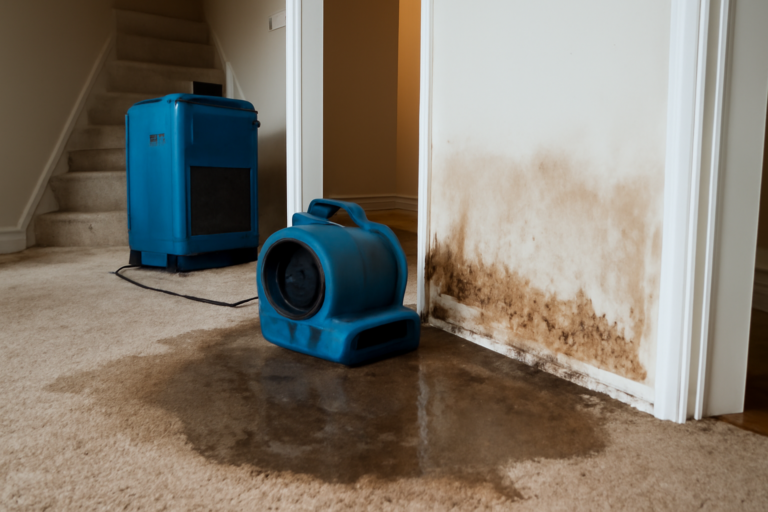
We set up specialized drying equipment, including air movers and dehumidifiers, to create an optimal drying environment. These machines work together to accelerate evaporation from the subfloor and surrounding materials. This controlled process is far more effective than natural evaporation and helps prevent secondary issues like mold. This phase can last anywhere from 24 hours to several days, depending on saturation levels.
Mold Prevention and Remediation
If mold has already started to grow or if the conditions are conducive, we’ll implement mold prevention treatments or perform professional remediation. This ensures your home’s air quality is safe and that mold doesn’t become a hidden problem. Addressing mold early is key to protecting your family’s health and your home’s value.
Subfloor Repair and Restoration
Depending on the damage, we may need to repair or replace sections of your subfloor. This could involve sealing it, reinforcing it, or installing new materials. Our goal is to restore the structural integrity of your floor system. We handle all necessary structural repairs to ensure your floors are sound.
Don’t let water damage linger beneath your floors. Contact us today for a prompt assessment and to begin the drying process. We’re ready to help you protect your investment and restore your home.

Warning Signs You Need Subfloor Water Damage Repair
Catching subfloor water damage early can save you a significant amount of money and stress. Many homeowners don’t realize there’s a problem until it becomes visible, but often, the signs are there if you know what to look for. Ignoring these indicators can lead to serious structural compromise and costly mold remediation.
Musty Odors That Won’t Go Away
A persistent, damp, or musty smell, especially when the air is still, is a classic sign of hidden moisture. This odor often originates from the subfloor or the crawl space, indicating a potential problem. It’s your home’s way of telling you something is wrong beneath the surface.
Soft or Spongy Flooring
If parts of your floor feel soft, spongy, or give way slightly when you walk on them, the subfloor may be saturated and weakened. This is a clear indication that the wood is compromised. This symptom often means the damage is already quite advanced.
Warped or Buckled Flooring
Visible warping, buckling, or unevenness in your hardwood, laminate, or vinyl flooring can be caused by moisture trapped beneath. The subfloor expands and contracts with moisture, pushing the flooring above it out of place. This is a definite sign of moisture.
Mold or Mildew Growth
You might see mold or mildew appearing on baseboards, walls near the floor, or even on the surface of your flooring. This growth thrives in damp environments, and its presence strongly suggests a moisture issue in the subfloor or crawl space. It’s a health hazard you shouldn’t ignore.
Increased Humidity Levels
If your home feels unusually humid, even when the air conditioning is running, or if condensation forms on windows, there might be excess moisture in the air originating from below. This can be caused by a damp subfloor or crawl space. It impacts indoor air quality and comfort.
Sounds of Squishing or Gurgling
In some cases, you might hear squishing or gurgling sounds when walking across certain areas of your floor. This suggests trapped water is being displaced underfoot. It’s an auditory cue that water is present and causing immediate issues.
Subfloor Water Damage Repair vs. DIY: When To Call a Professional
| Situation | DIY? | Call a Pro? | Why |
|---|---|---|---|
| Minor spill on hard surface floor | Yes | No | Easy to wipe up and dry quickly. |
| Slightly damp area after a small leak, visible and accessible | Maybe | Yes | To ensure complete drying and check for hidden moisture. |
| Persistent musty odor from under the floor | No | Yes | Odor indicates hidden moisture and potential mold. |
| Soft, spongy, or warped flooring | No | Yes | Sign of subfloor saturation and structural compromise. |
| Suspected leak from plumbing within walls/floors | No | Yes | Requires professional leak detection and specialized drying. |
| Water damage in a crawl space or basement subfloor | No | Yes | Complex environment requiring professional equipment and expertise. |
While minor spills can sometimes be managed with DIY efforts, any situation involving persistent moisture, potential mold, or structural concerns under your flooring absolutely requires professional attention. Our team has the specialized equipment and training to handle these complex issues effectively. We ensure your home is dried properly, preventing future costly problems.
Subfloor Water Damage Repair Cost In Stone Mountain, GA
The cost of subfloor water damage repair in Stone Mountain, GA, can vary widely based on several factors. These include the size of the affected area, the depth of the water intrusion, the type of subfloor material, and the extent of any secondary damage like mold or rot. The following figures are general estimates and not a guarantee of price. A thorough on-site inspection is always needed for an accurate quote.
| Service Aspect | Typical Price Range | What Affects Cost |
|---|---|---|
| Water Extraction (Subfloor) | $500 – $2,000 | Volume of water, accessibility of the area. |
| Moisture Detection & Assessment | $300 – $750 | Technology used (e.g., thermal imaging), complexity of the floor plan. |
| Controlled Drying (Equipment Rental) | $800 – $3,000 | Duration of drying needed, number of machines required. |
| Mold Prevention/Treatment | $400 – $1,500 | Size of area, type of treatment applied. |
| Subfloor Repair (Minor patching) | $500 – $1,500 | Material cost, complexity of the patch. |
| Subfloor Replacement (Partial) | $1,000 – $4,000+ | Square footage, type of subfloor material, labor intensity. |
We offer free estimates for subfloor water damage repair. Our technicians will assess your specific situation and provide a clear breakdown of the necessary work and associated costs. We also work diligently to help you navigate your insurance claim process.
Service Areas Near Stone Mountain, GA
Atlanta, Decatur, Lithonia, Snellville, Lawrenceville, Tucker, Lilburn, Norcross, Clarkston, Avondale Estates, Scottdale, Pine Lake, Mountain Park, Chamblee, Dunwoody, Sandy Springs, Brookhaven, Doraville, Johns Creek, Suwanee.
Common Questions About Subfloor Water Damage Repair
How long does subfloor water damage repair typically take?
The timeline for subfloor water damage repair can vary greatly, usually ranging from a few days to a couple of weeks. The initial water extraction and assessment happen within the first 24-48 hours. The drying process itself can take anywhere from 3 to 10 days, depending on how saturated the subfloor is and the environmental conditions. Following that, any necessary repairs or reconstruction will add to the overall time. We aim to work as efficiently as possible to minimize disruption to your life and restore your home quickly.
Will my homeowner’s insurance cover subfloor water damage repair?
In most cases, homeowner’s insurance does cover subfloor water damage, especially if the water source was sudden and accidental, like a burst pipe or appliance failure. However, policies differ, and coverage for damage due to neglect or poor maintenance (like a slowly leaking pipe over a long period) might be excluded. We have extensive experience working with insurance companies in the area and can help you document the damage properly and understand your policy’s specifics to facilitate your claim.
What are the health risks associated with subfloor water damage?
The primary health risk is mold growth. Damp subfloors create ideal conditions for mold and mildew, which can release spores into your indoor air. Inhaling these spores can trigger allergies, asthma symptoms, respiratory infections, and other health problems, especially for sensitive individuals. It’s crucial to address subfloor moisture promptly to prevent mold proliferation and protect your family’s well-being.
What kind of equipment do you use for drying subfloors?
We utilize a range of professional-grade equipment designed for effective moisture removal. This includes high-powered water extractors for standing water, industrial dehumidifiers to pull moisture from the air and materials, and specialized air movers (fans) to create airflow that accelerates evaporation from the subfloor. We also use moisture meters and thermal imaging cameras to precisely identify and monitor moisture levels, ensuring a thorough and efficient drying process.
Can I just seal the subfloor if it’s slightly damp?
Sealing a damp subfloor without properly drying it first is a bad idea. Trapping moisture within the subfloor can lead to more severe problems like rot, mold growth, and structural weakening over time. It’s essential to allow the subfloor to dry completely before any sealing or repair work is done. We conduct a complete moisture assessment to determine the best course of action, ensuring the problem is fully resolved.
Check Our Other Relevant Services
- Downspout Failure Water Damage Restoration in Stone Mountain, GA
- Septic Tank Backup Cleanup in Stone Mountain, GA
Serving Stone Mountain, GA And Nearby Areas