Trusted by 165+ Homeowners
Attic Water Damage Restoration in Lilburn, GA
- Over 165 5-Star Reviews
- Free Estimates and Quotes
- 100% Satisfaction Guaranteed
- Child, Family & Pet Safe Steps
- 24-Hour Emergency Service
- Fully Licensed & Insured

When Water Invades Your Attic in Lilburn, GA
You’re up there looking for holiday decorations, or maybe just checking on a strange drip, and then you see it. Dark, wet stains spreading across the insulation. A faint, unpleasant smell that wasn’t there before. It’s a sinking feeling, knowing that water is actively damaging your attic, and you need to act fast. This isn’t just a minor inconvenience; it’s a situation that requires immediate professional attention to prevent further problems throughout your home in Lilburn, GA.
We’ve helped over 165 local homeowners tackle unexpected attic water damage, and they consistently choose us because we understand the unique challenges of this type of restoration. You’re not just getting a repair; you’re getting a team dedicated to restoring your home’s integrity and preventing future issues. We know how stressful this can be, and our goal is to make the process as smooth as possible for you.
- We use specialized equipment to precisely measure and remove all hidden moisture, ensuring your attic dries completely and preventing mold growth.
- Our technicians are trained to identify the source of the leak and address it, not just the resulting water damage, so you won’t have the same problem next week.
- We focus on protecting your home’s structure, from the wooden beams to the drywall, using proven methods to restore it to its pre-loss condition.
How Attic Water Damage Restoration Actually Works
Dealing with attic water damage requires a methodical, science-based approach. It’s not enough to simply mop up visible water. You need to address the moisture that’s already soaked into materials and is continuing to spread. Our process is designed to be thorough, ensuring that we not only remove the standing water but also dry out the affected areas to prevent long-term damage and mold. Ignoring the hidden moisture is a recipe for costly structural problems down the road, so we take every step seriously.
Water Source Identification and Containment
The first crucial step is finding out exactly where the water came from. Was it a leaking roof, a faulty pipe, or something else? Our crews will meticulously inspect your attic to pinpoint the origin. Then, we’ll work to contain the water flow to prevent it from spreading further into your home. This containment is essential for limiting the scope of damage.
Water Extraction
Once the source is identified and contained, we’ll begin removing the bulk of the water. We use powerful, specialized extraction equipment that goes beyond what a simple shop vac can do. This process is designed to remove as much standing water as possible, quickly and efficiently, and it helps to minimize saturation.
Drying and Dehumidification
This is where the real science comes in. We bring in industrial-grade air movers and dehumidifiers specifically chosen for their power and efficiency. These machines create controlled airflow and reduce humidity levels to accelerate the drying process. We monitor moisture levels constantly with specialized meters to ensure materials dry properly, typically within a few days.
Mold Prevention and Remediation
Attic environments are prone to mold growth when moisture is present. As soon as the drying process begins, we implement mold-prevention strategies. If mold has already started to form, our trained technicians will safely remove it using industry-standard procedures, ensuring a healthy living environment for your family.
Structural Drying and Material Assessment
We carefully assess all affected materials, including insulation, wood framing, and drywall. Our goal is to dry these materials in place whenever possible to avoid unnecessary demolition and replacement. If materials are too damaged to be salvaged, we’ll recommend the best course for their removal and replacement, ensuring structural soundness.
Don’t let attic water damage linger. Call us today to get your attic inspected and restored quickly. We’re ready to help you protect your home from further harm.
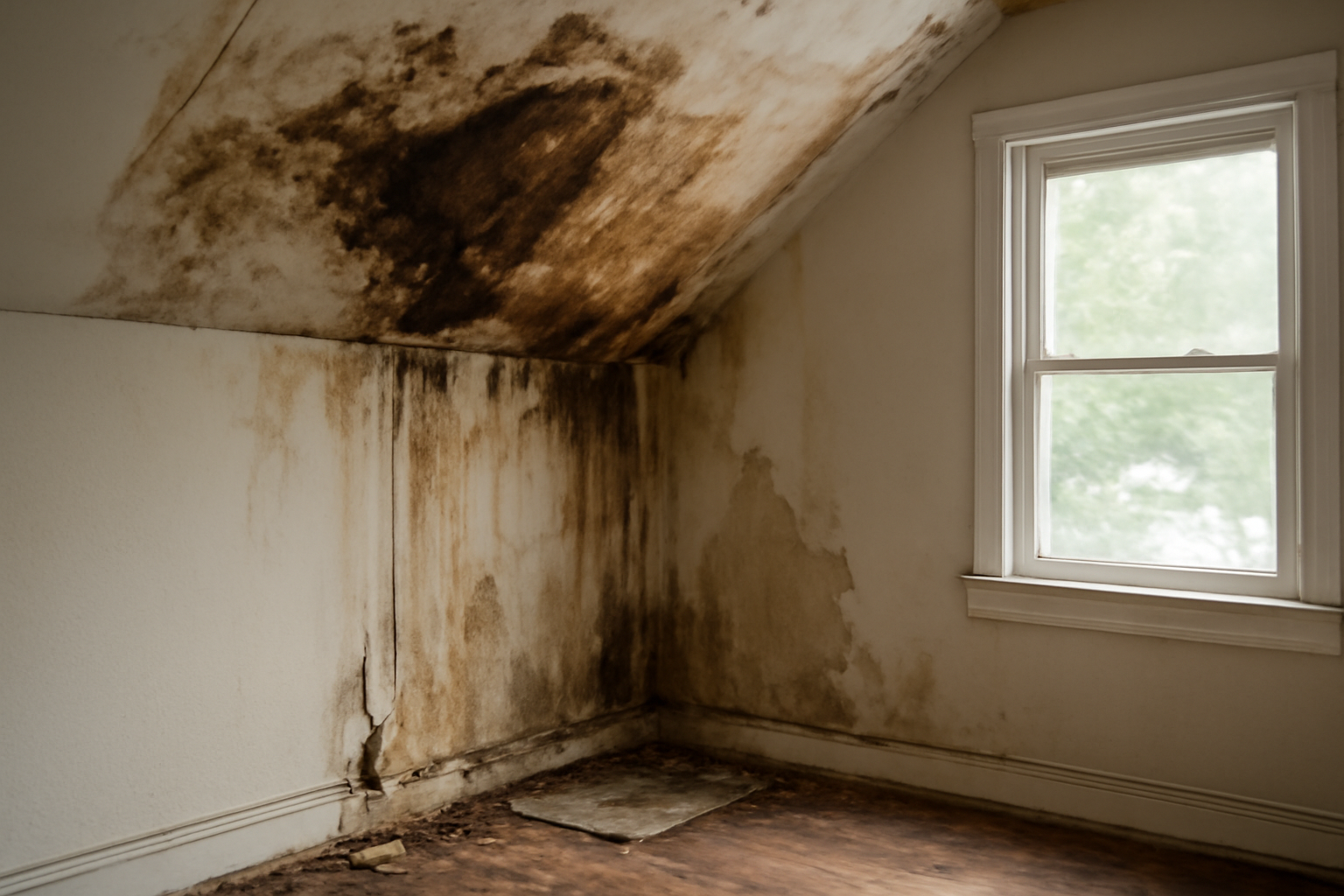
Warning Signs You Need Attic Water Damage Restoration
Your attic might seem out of sight, out of mind, but it’s a critical part of your home’s structure. Catching the early signs of water damage is key to preventing more extensive and expensive repairs. Ignoring these indicators can lead to serious issues like mold, rot, and compromised structural integrity, so it’s important to know what to look for.
Musty Odors That Won’t Go Away
One of the most common early indicators is a persistent musty or moldy smell that seems to originate from your attic or the ceiling below it. This odor often means there’s hidden moisture and potential mold growth that needs immediate professional attention.
Visible Water Stains or Discoloration
Look for dark or discolored spots on your ceiling or the attic’s wood framing and insulation. These stains are clear evidence of water intrusion and suggest that the material has been wet for some time, requiring thorough drying.
Dripping Water or Damp Insulation
If you see water actively dripping from the ceiling or notice that your attic insulation feels damp or is falling apart, it’s a critical sign. This indicates a significant leak that needs fast and effective remediation.
Sagging Ceiling or Walls
Waterlogged materials, especially drywall and wood, can become heavy and start to sag or warp. A visibly sagging ceiling or wall is a serious warning sign of structural damage that needs expert assessment.
Increased Humidity in Your Home
A sudden increase in humidity levels throughout your house, even when your HVAC system is working correctly, could be a sign that moisture is escaping from your attic. This indicates hidden moisture problems.
Pest or Insect Infestation
Damp, dark spaces are attractive to many pests and insects. An unexplained increase in bugs or rodents in your attic or upper floors could be a secondary sign that there’s a water issue creating an inviting environment for them, signaling a need for assessment.
Attic Water Damage Restoration vs. DIY: When To Call a Professional
| Situation | DIY? | Call a Pro? | Why |
|---|---|---|---|
| Small, visible water spot on attic ceiling, no active leak | Maybe | Yes | Difficult to assess hidden moisture and potential mold without specialized tools. |
| Active dripping from a suspected roof leak | No | Yes | Safety risk, requires professional roof inspection and immediate water extraction. |
| Musty odor in attic, no visible signs of water | No | Yes | Hidden moisture and mold growth are likely and require professional detection and drying. |
| Wet insulation that’s easily accessible | Maybe | Yes | Proper drying techniques are crucial to prevent mold and structural damage. |
| Water damage near electrical wiring or fixtures | Absolutely Not | Yes | Extreme safety hazard; requires specialized knowledge and equipment. |
| Extensive water stains or sagging drywall | No | Yes | Indicates significant saturation and potential structural compromise. |
For most attic water damage scenarios, especially those involving active leaks, hidden moisture, or potential mold, calling a professional is the safest and most effective route. Our team has the specialized equipment and expertise to properly dry your attic and prevent future problems, saving you time and potential headaches.
Attic Water Damage Restoration Cost In Lilburn, GA
The cost for attic water damage restoration in Lilburn, GA, can vary significantly based on the extent of the damage, the size of your attic, and the specific materials affected. These prices are general estimates, and a thorough on-site inspection is always necessary for an accurate quote. We aim to provide transparent pricing for our services.
| Service | Typical Price Range | What Affects Cost |
|---|---|---|
| Water Source Identification & Containment | $300 – $800 | Complexity of leak, accessibility of the source. |
| Water Extraction | $500 – $2,000 | Amount of standing water, size of the attic. |
| Structural Drying & Dehumidification | $700 – $3,500 | Severity of saturation, size of the space, duration of drying needed. |
| Mold Prevention Treatment | $400 – $1,200 | Size of the treated area, type of preventative solution used. |
| Insulation Removal & Replacement | $500 – $2,500 | Square footage affected, type and R-value of insulation. |
| Minor Structural Repair (wood rot, etc.) | $600 – $3,000+ | Extent of rot, complexity of repair, materials needed. |
It’s important to remember that addressing attic water damage promptly can actually save you money in the long run by preventing more severe issues. We offer free, no-obligation estimates to give you a clear understanding of the costs involved for your specific situation.
Service Areas Near Lilburn, GA
Snellville, Lawrenceville, Tucker, Norcross, Peachtree Corners, Duluth, Suwanee, Johns Creek, Chamblee, Doraville, Stone Mountain, Scottdale, Clarkston, Decatur, Avondale Estates, Sandy Springs, Roswell, Alpharetta, Marietta, Smyrna.
Common Questions About Attic Water Damage Restoration
What’s the first thing I should do if I find water in my attic?
The very first thing you should do is try to identify and shut off the water source if it’s safe to do so, and then call a professional restoration company immediately. If the water is coming from a roof leak, you’ll want to cover any damaged ceiling areas below with plastic sheeting to protect your living space. It’s crucial to act fast to prevent mold growth and structural damage, so contacting us is your best next step.
How long does attic water damage restoration typically take?
The timeline for attic water damage restoration can vary, but the drying process itself usually takes between 3 to 5 days with our advanced equipment. However, the total time can be longer if there’s significant structural damage requiring repairs or replacement of materials like insulation or drywall. We work efficiently to get your attic fully restored as quickly as possible.
Is attic water damage a health hazard?
Yes, attic water damage can pose significant health risks, primarily due to mold growth. Mold spores can become airborne and, when inhaled, can cause allergic reactions, respiratory problems, and other health issues, especially for those with pre-existing conditions. Our team takes mold prevention and remediation very seriously to ensure your home is safe.
What kind of equipment do you use to dry out an attic?
We utilize powerful, industrial-grade equipment designed for effective water damage restoration. This includes high-speed air movers to create airflow, specialized dehumidifiers to remove moisture from the air, and moisture meters to accurately track drying progress. This equipment is essential for ensuring that all areas of your attic are thoroughly dried and safe.
Can I just replace the wet insulation myself?
While you might be able to remove visibly wet insulation, it’s generally not recommended to handle the entire drying and restoration process yourself. Hidden moisture can remain in the wood and other materials, leading to mold and rot. Our technicians have the tools and expertise to detect and eliminate all moisture, ensuring a complete and safe restoration.
Check Our Other Relevant Services
Serving Lilburn, GA And Nearby Areas