
Trusted by 165+ Homeowners
Attic Water Damage Restoration in Tyrone, GA
- Over 165 5-Star Reviews
- Free Estimates and Quotes
- 100% Satisfaction Guaranteed
- Child, Family & Pet Safe Steps
- 24-Hour Emergency Service
- Fully Licensed & Insured

When Leaks Reach Your Attic in Tyrone, GA: What You Need to Know Now
Your attic might seem like a forgotten space, but it’s a critical part of your home’s structure. When a pipe bursts upstairs or a roof leak begins, that water doesn’t just stay on the upper floor. It often finds its way into your attic, causing hidden damage that can quickly become a major problem. Ignoring attic water issues can lead to structural rot and mold growth, so it’s vital to address it right away. We’re here to help you understand what’s happening and how to fix it.
Local homeowners trust our team because we understand the urgency of attic water damage. With over 165 five-star reviews from people in your neighborhood, you can see that we’re dedicated to providing reliable, fast service. We know that when water infiltrates your attic, every hour counts. That’s why getting the right help quickly makes all the difference in protecting your home and your family’s health.
- Rapid water extraction specifically from attic spaces prevents further saturation of insulation and wood framing, saving you from more extensive repairs.
- Targeted drying and dehumidification of attics combat mold and mildew growth, which can spread rapidly in damp, dark environments, protecting your indoor air quality.
- Our specialized equipment can reach and dry out the most inaccessible areas within your attic, ensuring a thorough restoration that prevents long-term structural compromise.
How Attic Water Damage Restoration Actually Works
When water enters your attic, it’s not like a typical basement flood. The damage can be spread out, hidden in insulation, and compromise the very structure of your roof and ceiling. Our process is designed for this specific challenge. We focus on immediate containment and drying to stop the damage from spreading and prevent secondary issues like mold. A rushed or incomplete job here can lead to costly recurring problems down the line, so we take every step with precision.
Step 1: Emergency Inspection and Assessment
Our technicians will first perform a detailed inspection of your attic. We use moisture meters and thermal imaging cameras to identify exactly where the water is and how far it has spread. This initial assessment is crucial for creating an effective restoration plan and providing you with an accurate estimate for the necessary repairs.
Step 2: Water Extraction and Removal
Once we’ve located all the wet areas, we begin removing standing water. For attics, this often involves specialized pumps and vacuums designed to access tight spaces. The goal is to remove as much water as possible, as quickly as possible, to prevent further saturation of materials like wood and insulation. This fast water removal is key to minimizing damage.
Step 3: Drying and Dehumidification
After the bulk of the water is gone, we set up industrial-strength air movers and dehumidifiers. These machines work tirelessly to pull moisture out of the air and materials in your attic. Proper drying is essential to prevent mold growth and ensure that the wood framing returns to its normal moisture content, preventing warping or rotting. We monitor the drying process closely, often taking several days, to ensure complete dryness.
Step 4: Mold Prevention and Remediation
Damp attics are a breeding ground for mold. If mold is already present, our certified technicians will safely remove it. We also apply antimicrobial treatments to prevent future mold growth, especially in areas that were heavily affected. Protecting your home from mold is a critical part of the process.
Step 5: Rebuilding and Restoration
Depending on the extent of the damage, some materials in your attic may need to be replaced. This could include insulation, drywall, or even parts of the wooden structure. Our team will work to restore your attic to its pre-loss condition, ensuring it’s safe, dry, and structurally sound. We aim for a restored, healthy environment.
Don’t let attic water damage linger. Acting fast can save your home from extensive repairs and health risks. Call us now to get our team on-site and start the drying process immediately. This swift action is your best defense.
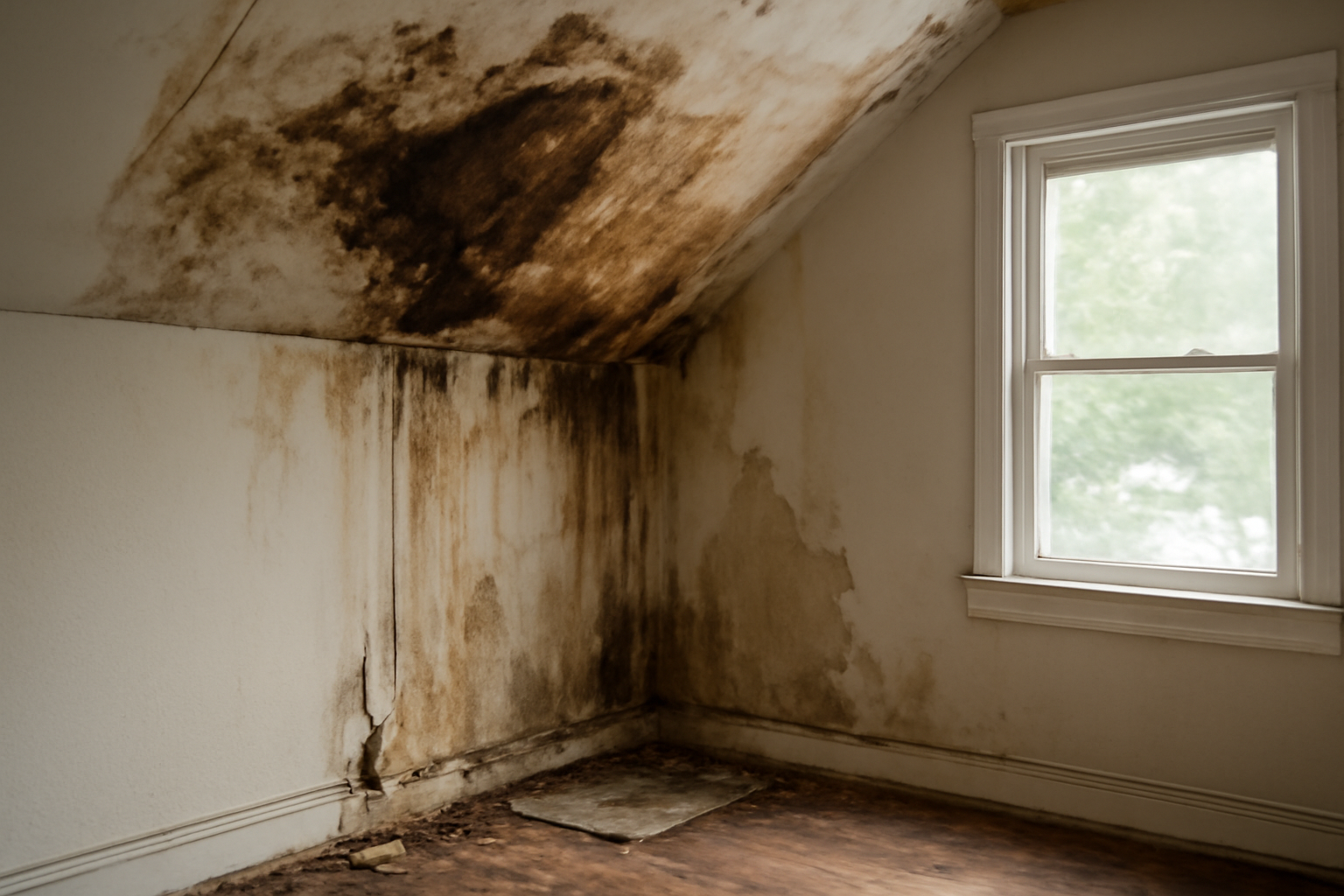
Warning Signs You Need Attic Water Damage Restoration
Your attic might be out of sight, but it’s not out of reach when it comes to water damage. Catching the early signs can save you a lot of money and prevent serious structural issues and mold infestations. Pay attention to what your home is telling you; it’s often trying to warn you about hidden moisture problems.
Musty Odors That Won’t Go Away
A persistent damp, musty smell, especially when you’re near the attic access or on the top floor, is a classic sign of water intrusion and potential mold growth. This unpleasant odor indicates trapped moisture that needs professional attention.
Visible Water Stains or Discoloration
Look for dark spots or rings on your attic’s ceiling or rafters. These stains are clear indicators that water has been present and is likely continuing to seep in. Addressing these visible water marks is crucial to stop the source.
Sagging Ceiling or Walls
If you notice your ceiling starting to sag, especially in the areas directly below the attic, it means the ceiling material is becoming saturated and heavy. This is a sign of significant water accumulation and a potential structural risk.
Increased Humidity Levels
A sudden increase in the overall humidity of your home, particularly on the upper levels, can be a sign that moisture is escaping from your attic. This elevated humidity can make your home feel clammy and contribute to mold growth elsewhere.
Dripping Sounds
While sometimes hard to pinpoint, hearing faint dripping sounds from your ceiling or within the walls, especially after rain or a plumbing issue, means water is actively making its way into your attic and down into your living space. These audible clues shouldn’t be ignored.
Wet or Damp Insulation
If you’ve had reason to access your attic, check your insulation. If it feels damp, heavy, or is visibly wet, it’s a direct sign of water intrusion. Wet insulation loses its effectiveness and can become a breeding ground for mold, making insulation replacement necessary.
Attic Water Damage Restoration vs. DIY: When To Call a Professional
| Situation | DIY? | Call a Pro? | Why |
|---|---|---|---|
| Small, isolated drip from a condensation line | Yes, if you can easily access and dry the spot. | No, unless it persists. | Minor condensation issues are usually manageable without professional help. |
| Visible mold growth (larger than a dinner plate) | No. | Yes. | Mold spores can spread easily, and professional containment is needed for safety and thorough removal. |
| Suspected roof leak causing extensive attic wetting | No. | Yes. | Identifying and repairing the roof leak source requires specialized knowledge and safety equipment. |
| Waterlogged insulation throughout the attic | No. | Yes. | Professionals have the equipment to safely remove and dry or replace large quantities of wet insulation efficiently. |
| Musty odors but no visible signs of water | No. | Yes. | Hidden moisture and mold can be present, requiring advanced detection and remediation techniques. |
| Water damage affecting attic structural beams or rafters | No. | Yes. | Structural integrity is paramount; professionals assess and repair wood damage to ensure safety. |
For anything beyond a very minor, easily contained drip, calling our team is the smartest choice for attic water damage. We have the specialized equipment and expertise to handle the unique challenges of attic spaces, ensuring a complete and safe restoration. This professional approach protects your home’s integrity.
Attic Water Damage Restoration Cost In Tyrone, GA
The cost for attic water damage restoration in Tyrone, GA, can vary significantly. Factors like the size of your attic, the amount of water, the type of insulation present, and the extent of structural damage all play a role. These price ranges are general estimates for the area. A thorough on-site assessment is needed for an exact quote.
| Service | Typical Price Range | What Affects Cost |
|---|---|---|
| Initial Inspection & Moisture Detection | $300 – $700 | Complexity of attic layout, need for specialized equipment like thermal cameras. |
| Water Extraction (Attic) | $700 – $2,500 | Volume of water, accessibility of the attic, and time required for removal. |
| Drying and Dehumidification | $1,000 – $4,000 | Size of the attic, severity of saturation, and duration needed to reach optimal dryness levels. |
| Mold Testing and Remediation | $500 – $3,000+ | Amount of mold present, type of mold, and containment measures required. |
| Insulation Removal and Replacement | $2 – $7 per square foot | Type of insulation, amount needing replacement, and labor involved. |
| Minor Structural Repairs (Attic) | $500 – $3,000+ | Severity of wood rot or damage, and the extent of structural components needing repair or replacement. |
Remember, these figures are estimates. We provide free, no-obligation estimates after a detailed inspection of your attic damage. Getting a professional assessment is the first step to understanding your specific costs.
Service Areas Near Tyrone, GA
Fayetteville, Peachtree City, Newnan, Stockbridge, Riverdale, Jonesboro, Hampton, Morrow, Lovejoy, Locust Grove, McDonough, Lithia Springs, Douglasville, Hiram, Dallas, Powder Springs, Austell, Atlanta, Marietta, Smyrna.
Common Questions About Attic Water Damage Restoration
My attic is wet after heavy rain. Should I try to dry it myself?
While you can try to ventilate the area, it’s highly recommended to call professionals for attic water damage. Attics are difficult to access and dry completely. Our team uses specialized equipment to ensure all moisture is removed, preventing mold and structural damage, which is hard to achieve with DIY methods. We’ll inspect for the source and ensure a thorough drying process.
How much does attic water damage restoration typically cost?
The cost can range from $1,000 to $5,000 or more, depending on the extent of the damage, the size of your attic, and the services needed, like mold remediation or structural repairs. Factors such as water saturation levels and insulation type significantly impact pricing. We offer free estimates to give you a clear picture of the investment.
How long will it take to dry out my attic?
Drying an attic typically takes 3 to 7 days, sometimes longer, depending on the severity of the water intrusion and the building materials involved. We use high-powered air movers and dehumidifiers to speed up the process, but ensuring complete moisture removal is critical. Our team monitors the drying process closely to confirm it’s done correctly.
Is attic water damage a health hazard?
Yes, attic water damage can pose health risks, primarily due to mold growth. Mold spores can become airborne and lead to respiratory issues, allergies, and other health problems for your family. Addressing the water source and ensuring the attic is thoroughly dried and treated is crucial for preventing mold and protecting your health.
What if my homeowner’s insurance doesn’t cover attic water damage?
Some policies have limitations on water damage coverage, especially if it’s due to slow leaks or lack of maintenance. However, many sudden and accidental events are covered. We can help you document the damage for your insurance claim and work with your provider to ensure you receive the coverage you’re entitled to. Understanding your policy details is important, and we’re here to assist with the process.
Check Our Other Relevant Services
Serving Tyrone, GA And Nearby Areas


