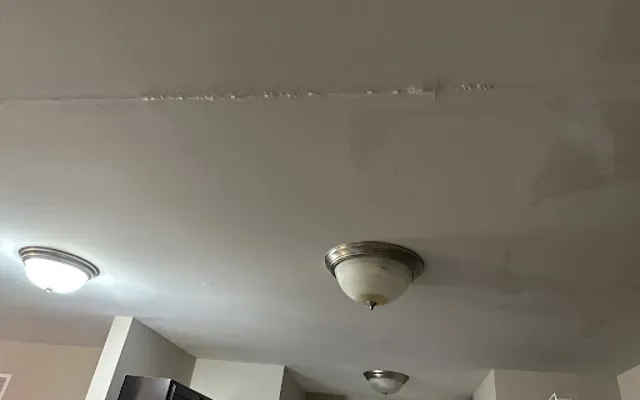
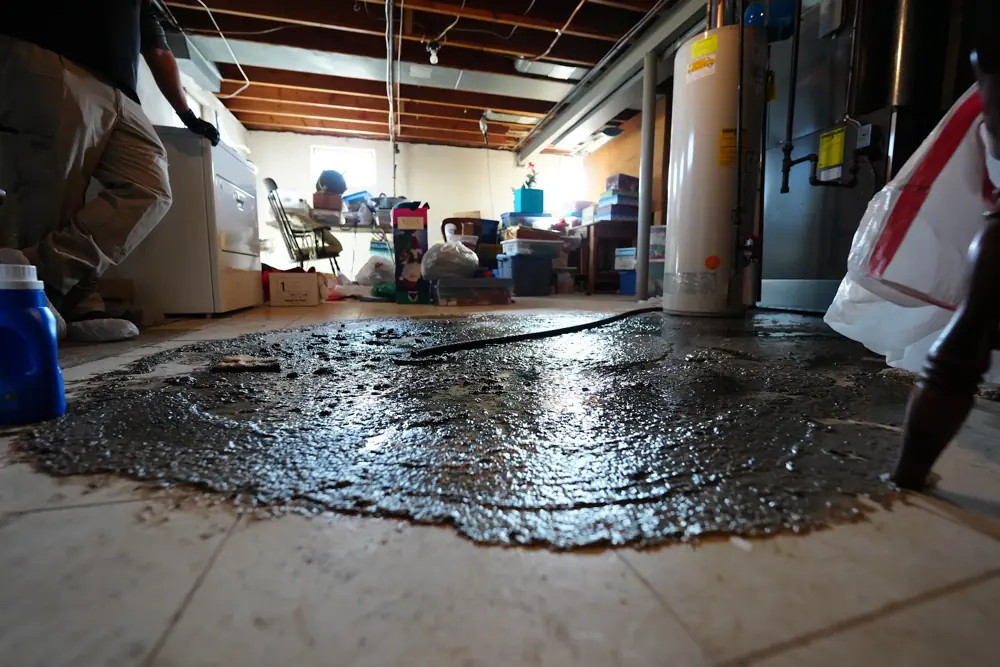
A brown ring or a sagging bulge on the ceiling means water is already pooling above the drywall. Local crews trace the source, relieve the trapped water safely, and dry the cavity across Atlanta, any hour of the day.

Technicians trace the water above the ceiling to a roof leak, a plumbing line, or attic condensation, and confirm it is stopped or covered before any drying begins.
Where a ceiling is bulging, crews safely release the pooled water at a controlled point so the drywall does not fail suddenly and the cavity can begin to drain.
Air movers and dehumidifiers dry the ceiling drywall, the joist cavity, and any insulation above to an IICRC-standard target, opening access points only where needed.
Moisture readings confirm the ceiling and framing are dry, damaged sections are prepped for repair, and photos and readings are recorded for the insurance carrier.

While help is on the way, these first steps, done only where it is safe, limit the damage and protect the insurance claim.
Shut the supply off at the source, or close the home's main valve if the source is not obvious. Stopping the flow limits the damage more than anything else.
Switch off electricity to the affected area, but only if the breaker can be reached without standing in or touching the water.
Get a crew dispatched right away. The sooner extraction and drying begin, the more flooring, drywall, and belongings can be saved.
Take photos and a short video of the water and the affected rooms before anything is moved, so the insurance claim starts strong.
Ceiling water damage cleanup in Atlanta commonly runs from about $1,000 to $5,000, depending on the source, how much drywall has soaked, and whether the joists and insulation above need extended drying. A small isolated stain sits at the low end, while a sagging ceiling with saturated framing and insulation reaches the high end. The crew documents moisture readings and photos so the carrier has clear support.
Crews reach Atlanta and the metro fast, from intown neighborhoods like Grant Park, Inman Park, and Virginia-Highland to nearby Decatur, Brookhaven, Sandy Springs, East Point, and College Park. See the full list on the areas served across Atlanta page.
See all areas servedEvery loss is photographed, measured, and logged from the first visit, so the paperwork holds up with your insurance carrier.
Technicians follow recognized IICRC drying standards and prove the work with daily moisture readings, not guesswork.
Emergency dispatch any hour of the day or night, with a real crew on the way, not a callback in the morning.
A real crew dispatched any hour, not a callback in the morning.
Trained technicians following recognized IICRC drying standards.
Truck-mounted, portable, and submersible for any size loss.
The loss is documented and billed to the carrier directly.
Yes. A bulge means water has pooled above the drywall and the sheet is losing its strength, and a saturated ceiling can come down suddenly. Stay out from under it and call for help. A crew relieves the trapped water at a controlled point so the failure is managed rather than sudden, then dries the cavity.
Crews trace the stain to its source, which in Atlanta is usually a roof leak, a plumbing line in the floor above, or attic condensation on ductwork. Moisture meters and the pattern of the staining show the entry point and how far the water traveled along the framing before pooling.
Not until it is dry and the source is fixed. Painting over a damp stain traps moisture, invites mold, and the stain bleeds back through. The cavity and framing are dried to a verified target first, the source is confirmed stopped, and only then is the ceiling repaired and refinished.
A sudden event such as a storm roof leak or a burst upstairs pipe is commonly covered, while a long-neglected slow leak often is not. The crew documents the source, the moisture readings, and the affected materials with photos so the adjuster has clear support for the claim.
Atlanta crews are on call 24 hours a day, local and fast, and can be on the way within the hour.
Call (678) 990-6039