In West End, GA, HVAC condensation can soak ceilings and walls fast. Local crews respond quickly to trace the leak and dry the structure using IICRC-standard methods, helping protect the home from hidden moisture.

Technicians locate the exact source of the condensate escape in the attic or closet unit, whether a blocked drain or a full pan. They confirm the leak is fully stopped to prevent new water from entering the home's structure.
Trapped water is extracted. If the ceiling or wall below the air handler is wet, the crew carefully opens that section to expose the framing and insulation inside, allowing air to reach all damp materials.
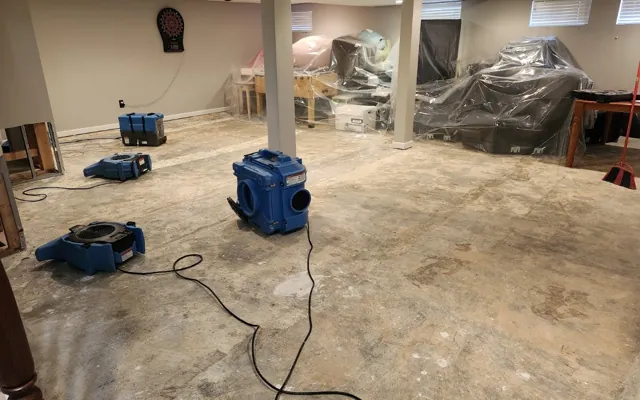
Air movers and dehumidifiers are placed to dry the exposed cavity around the unit. They run until moisture readings meet the target, preventing the constant summer moisture from settling into the historic wood.

HVAC condensation cleanup in West End commonly runs from about $800 to $4,000, depending on how long the leak ran, whether an attic unit soaked the ceiling below, and if mold has taken hold around the equipment. A minor pan overflow caught early sits at the low end, while a season-long attic leak with a stained ceiling and mold reaches the high end. The crew documents readings and photos for the carrier.
In West End's older, historic homes near the BeltLine, original roofs and aging supply lines are common. A persistent drip from a clogged HVAC condensate line can follow old framing and lath, soaking a ceiling or wall long before a stain appears, risking rot and odor in the humid climate. West End's historic homes often have HVAC systems retrofitted into tight spaces like attics. In the humid subtropical climate, condensate drain lines can clog with algae, and overflow pans can fail, letting water seep into original wood framing before it's noticed below. From West End, crews also cover nearby Grant Park, Inman Park, Reynoldstown, Adair Park, Peoplestown, Pittsburgh. See every neighborhood and town on the full service area page.
See all areas servedEvery loss is photographed, measured, and logged from the first visit, so the paperwork holds up with your insurance carrier.
Technicians follow recognized IICRC drying standards and prove the work with daily moisture readings, not guesswork.
Emergency dispatch any hour of the day or night, with a real crew on the way, not a callback in the morning.
A real crew dispatched any hour, not a callback in the morning.
Trained technicians following recognized IICRC drying standards.
Truck-mounted, portable, and submersible for any size loss.
The loss is documented and billed to the carrier directly.
Costs depend heavily on the leak's duration and location. A minor pan overflow caught early is at the lower end, while a long-term attic leak that soaks a ceiling and leads to mold can reach the higher range. Local crews document everything to help with the insurance process.
In West End's older homes, water can travel along the lath. The crew will likely need to open a small section of the wet ceiling to dry the wood framing behind it properly. They use air movers and dehumidifiers to dry the cavity to a standard that prevents rot.
Crews are on call 24 hours a day and can be on the way to West End within the hour.
Call (678) 990-6039