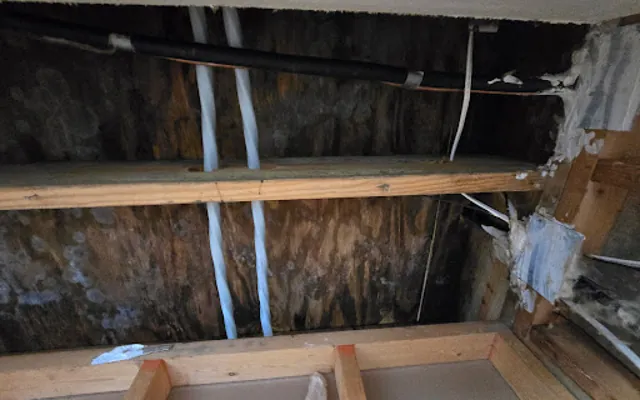
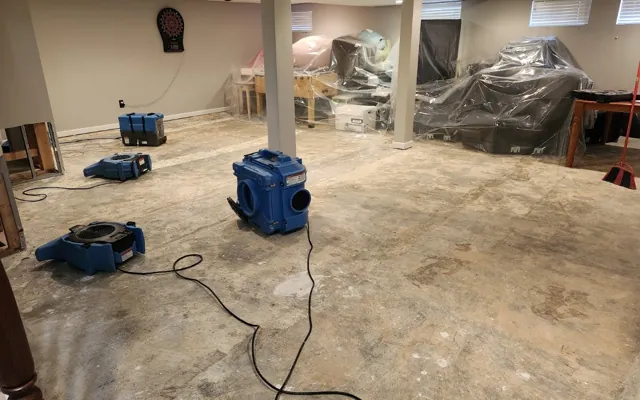
Ice dam water damage in Grant Park, GA demands fast response to stop the leaks and dry historic framing. Local crews use IICRC-standard methods to protect the home's structure and finishes.

The team first confirms the roof leak has stopped as the ice melts, arranging a temporary cover if needed. They then identify every ceiling, wall, and attic area the backed-up water reached in the Grant Park home.
Soaked attic insulation is bagged and removed because it holds melt water against the historic framing and ceiling below. Once saturated, this material cannot dry and will continue to wet the structure.
Air movers and dehumidifiers are placed to dry the roof deck, attic framing, ceilings, and wall cavities. The goal is an IICRC-standard target so trapped melt water does not linger and feed mold in the humid Atlanta air.

Ice dam water damage cleanup in Grant Park commonly runs from about $1,500 to $7,000, depending on how much melt water entered, whether attic insulation and ceilings must be dried or replaced, and if mold has taken hold. A minor eave leak sits at the low end, while water spreading across ceilings and into walls reaches the high end. The crew documents readings and photos so the carrier has clear support.
In Grant Park, the late-1800s Victorian and Craftsman homes often have original basements and crawlspaces with aging supply lines. When an ice dam forms on the roof, melt water can back up under shingles and slowly soak into the old attic framing and ceiling plaster, causing hidden damage long before a stain appears. In Atlanta's humid climate, winter freeze-thaw cycles on north-facing roofs can form ice dams. In historic Grant Park, these dams force melt water under old shingles and into attics, where it soaks insulation and runs down into the original wall cavities and ceiling lath. From Grant Park, crews also cover nearby Inman Park, West End, Reynoldstown, Adair Park, Peoplestown, Pittsburgh. See every neighborhood and town on the full service area page.
See all areas servedEvery loss is photographed, measured, and logged from the first visit, so the paperwork holds up with your insurance carrier.
Technicians follow recognized IICRC drying standards and prove the work with daily moisture readings, not guesswork.
Emergency dispatch any hour of the day or night, with a real crew on the way, not a callback in the morning.
A real crew dispatched any hour, not a callback in the morning.
Trained technicians following recognized IICRC drying standards.
Truck-mounted, portable, and submersible for any size loss.
The loss is documented and billed to the carrier directly.
Cleanup in Atlanta commonly ranges from about 1,500 to 7,000 dollars. The final cost depends on how much melt water entered, whether attic insulation and ceilings need drying or replacement, and if any mold treatment is required. The crew documents everything to support the insurance claim.
Once fiberglass or cellulose attic insulation is saturated with melt water, it cannot be dried effectively. It acts like a sponge, holding moisture against the roof deck and ceiling framing, which can lead to rot and mold in the humid Georgia climate. Removal is necessary for proper drying.
Crews are on call 24 hours a day and can be on the way to Grant Park within the hour.
Call (678) 990-6039