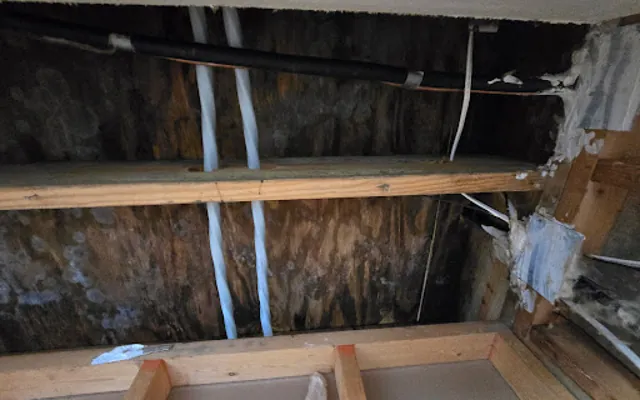
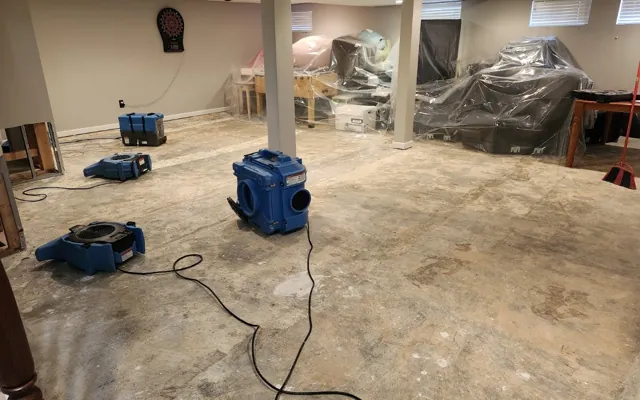
When ice dams cause a roof leak in Lake Claire, GA, local crews respond fast to stop the water, remove soaked insulation, and dry the structure to IICRC-standard targets to prevent hidden mold.

Technicians first make sure the roof leak from the melting dam is controlled. They then map every attic space, ceiling, and wall the backed-up melt water reached in the home to plan the drying.
Soaked attic insulation is bagged and taken out because it traps moisture against the roof deck and framing. This step is critical in Lake Claire's older homes to allow the structure to dry.
Air movers and dehumidifiers target the damp roof deck, attic framing, and wall cavities to IICRC-standard dryness. Moisture meters confirm the job is complete, preventing lingering dampness that could lead to mold.

Ice dam water damage cleanup in Lake Claire commonly runs from about $1,500 to $7,000, depending on how much melt water entered, whether attic insulation and ceilings must be dried or replaced, and if mold has taken hold. A minor eave leak sits at the low end, while water spreading across ceilings and into walls reaches the high end. The crew documents readings and photos so the carrier has clear support.
Lake Claire's wooded lots and 1920s-to-1940s homes, with their older framing and roofs, are prone to the slow leaks and hidden moisture that follow ice dams. Melt water backing up under shingles can quickly soak attic insulation and seep into ceilings, requiring a methodical approach to find and dry all the dampness. In the humid Atlanta climate, ice dams on older roofs can trap melt water. In Lake Claire, this water backs up under shingles, soaking insulation and seeping into the ceiling and wall cavities of these classic homes, creating a prime environment for mold if not dried properly. From Lake Claire, crews also cover nearby East Atlanta, Kirkwood, Morningside-Lenox Park, Virginia-Highland, Druid Hills, Candler Park. See every neighborhood and town on the full service area page.
See all areas servedEvery loss is photographed, measured, and logged from the first visit, so the paperwork holds up with your insurance carrier.
Technicians follow recognized IICRC drying standards and prove the work with daily moisture readings, not guesswork.
Emergency dispatch any hour of the day or night, with a real crew on the way, not a callback in the morning.
A real crew dispatched any hour, not a callback in the morning.
Trained technicians following recognized IICRC drying standards.
Truck-mounted, portable, and submersible for any size loss.
The loss is documented and billed to the carrier directly.
Most homeowner policies in Georgia cover sudden water damage from ice dams, but coverage for the dam removal itself can vary. Local crews document the water damage extent with photos and moisture readings, which provides the clear evidence carriers need to process the claim efficiently.
Drying a typical attic and ceiling cavity in a Lake Claire home usually takes two to four days. The timeframe depends on how much insulation was soaked and whether water traveled into wall cavities. Technicians use meters to confirm the structure meets drying standards before removing equipment.
Crews are on call 24 hours a day and can be on the way to Lake Claire within the hour.
Call (678) 990-6039