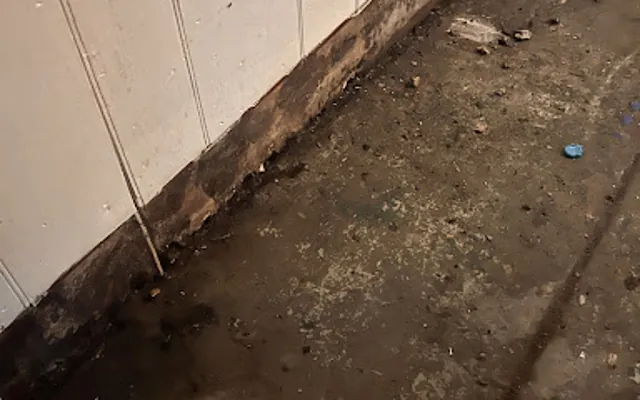
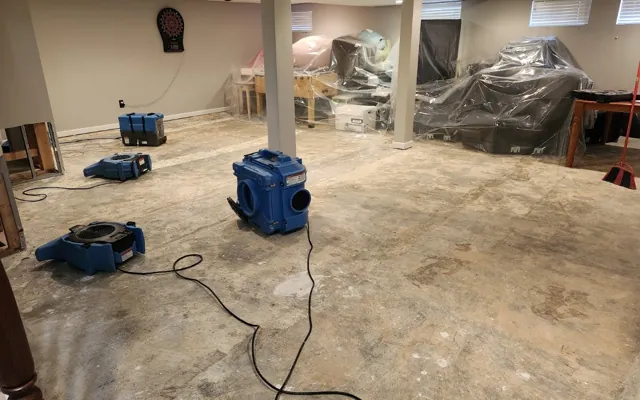
A septic tank backup in a compact Cabbagetown, GA home needs fast extraction. Local crews respond quickly, contain the black water, and follow IICRC-standard methods to protect the home and its neighbors from spreading contamination.

Technicians first seal off the affected area in the tight home to protect the rest of the interior. Wearing protective gear, they then extract all the contaminated black water and immediately remove porous materials like soaked carpet and drywall base.
After removal, the crew cleans all hard surfaces with specialized solutions to knock down bacteria. They then apply antimicrobial treatments and deodorize the space to eliminate the persistent smell of the septic backup common in these older homes.
Industrial air movers and dehumidifiers are placed to dry the structure to IICRC-standard targets. The team confirms dryness with moisture meters and documents all readings and photos to support the homeowner's insurance claim in Cabbagetown.

Septic backup cleanup in Cabbagetown commonly runs from about $2,000 to $8,000, driven by how much contaminated water spread, how many porous materials must be removed and replaced, and whether a finished basement is involved. A small contained backup sits at the low end, while a widespread black-water event across finished space reaches the high end. The crew documents the water category, readings, and photos so the carrier has clear support.
In Cabbagetown, GA, the closely spaced shotgun houses and worker cottages, many with decades-old plumbing, face a specific risk. A single septic line failure in one of these tight homes can let contaminated water spread quickly through the shared framing, threatening a neighbor's wall and creating an urgent health hazard. The area's aging plumbing in its historic, compact homes is a primary cause. Combined with the region's humid climate and red-clay soil, which can shift foundations, these factors make slow leaks and sudden septic backups more likely in Cabbagetown. From Cabbagetown, crews also cover nearby Old Fourth Ward, Peoplestown, Pittsburgh, Summerhill, Grant Park, Inman Park. See every neighborhood and town on the full service area page.
See all areas servedEvery loss is photographed, measured, and logged from the first visit, so the paperwork holds up with your insurance carrier.
Technicians follow recognized IICRC drying standards and prove the work with daily moisture readings, not guesswork.
Emergency dispatch any hour of the day or night, with a real crew on the way, not a callback in the morning.
A real crew dispatched any hour, not a callback in the morning.
Trained technicians following recognized IICRC drying standards.
Truck-mounted, portable, and submersible for any size loss.
The loss is documented and billed to the carrier directly.
For a contained incident in one of the area's smaller homes, the active cleanup and removal often takes one to two days. The drying phase typically requires several more days of equipment runtime to meet IICRC standards, with the crew monitoring progress daily.
Cost in Cabbagetown is driven by the volume of contaminated water and how many porous materials, like old wood flooring or plaster, must be removed. A small bathroom backup is at the lower end, while an event that spreads through a finished area reaches the higher range.
Crews are on call 24 hours a day and can be on the way to Cabbagetown within the hour.
Call (678) 990-6039