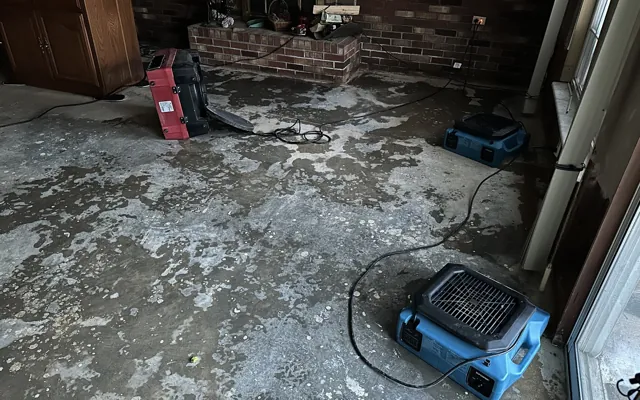
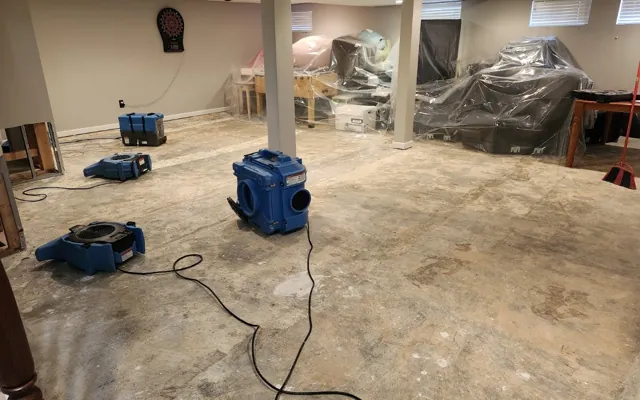
When a storm flood hits Cabbagetown, GA, local restoration crews respond fast to extract the water, stop the spread in close-set homes, and dry the structure following IICRC-standard methods to prevent long-term damage.

Technicians immediately pump out standing flood water and clear the mud and debris a storm carries into a Cabbagetown home. This fast action is key to stopping water from migrating through the tight, shared framing into other rooms.
Porous materials like carpet, pad, and lower drywall that flood water soaked are cut out and bagged for disposal. In these older homes, contaminated water cannot be safely dried in place, so removal is necessary.
Hard surfaces are cleaned and treated with antimicrobial solutions to address bacteria. The team then sets up air movers and dehumidifiers to dry the structure to IICRC standards, confirming dryness with moisture meters.

Storm and flood cleanup in Cabbagetown commonly runs from about $2,500 to $12,000, driven by how deep the water was, how much contaminated material must be removed, and whether a finished basement or multiple rooms are involved. A shallow contained event sits at the low end, while a deep creek flood across finished space reaches the high end. Flood coverage often differs from a standard policy, and the crew documents everything for the carrier.
In Cabbagetown, GA, the neighborhood's original 1880s-to-1920s worker cottages stand close together, with decades-old plumbing and aging roofs. A slow leak or backup in one of these compact homes can quickly spread through the shared, tight framing into a neighbor's wall, making rapid flood response critical. Cabbagetown's older homes have aging infrastructure susceptible to leaks. The humid subtropical climate brings heavy rainstorms that can overwhelm old drainage and flat lots, while the red-clay soil can hinder proper runoff, increasing the risk of water intrusion in these historic structures. From Cabbagetown, crews also cover nearby Old Fourth Ward, Peoplestown, Pittsburgh, Summerhill, Grant Park, Inman Park. See every neighborhood and town on the full service area page.
See all areas servedEvery loss is photographed, measured, and logged from the first visit, so the paperwork holds up with your insurance carrier.
Technicians follow recognized IICRC drying standards and prove the work with daily moisture readings, not guesswork.
Emergency dispatch any hour of the day or night, with a real crew on the way, not a callback in the morning.
A real crew dispatched any hour, not a callback in the morning.
Trained technicians following recognized IICRC drying standards.
Truck-mounted, portable, and submersible for any size loss.
The loss is documented and billed to the carrier directly.
Costs in the Atlanta area commonly range from about 2,500 to 12,000 dollars. The final price depends on factors like water depth, the amount of contaminated material removed from a home, and whether multiple rooms or a finished basement were affected.
Because flood water carries bacteria, porous materials it touches, like carpet and drywall base, must be removed. Technicians cut out and bag these items. They then clean and sanitize hard surfaces before drying the structure, a critical step in homes with older plumbing and framing.
Crews are on call 24 hours a day and can be on the way to Cabbagetown within the hour.
Call (678) 990-6039