When a water main breaks in Sandy Springs, GA, local crews respond fast to extract the flood and dry the home, following IICRC-standard methods to prevent mold and structural issues.

Technicians first stop the flow at the street meter. Then they pump out the large volume of water from the break, clearing it from every flooded area in the home before drying can begin.
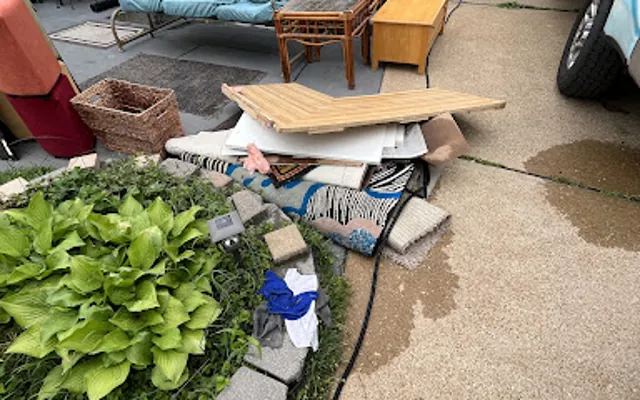
Porous items like carpet, padding, and the lower sections of drywall that the main break saturated are cut out. Ground contact or high water volume often means these materials cannot be saved.
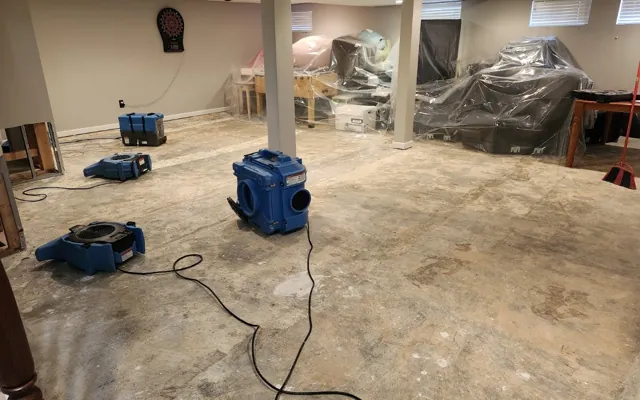
Industrial air movers and dehumidifiers are placed to dry the framing, subfloors, and walls. The target is an IICRC-standard dryness level, which handles the significant moisture a main break leaves.

Water main break cleanup in Sandy Springs commonly runs from about $2,000 to $10,000, driven by the volume of water, how far it spread, whether it surfaced through the slab or foundation, and if the water picked up ground contamination. A contained break sits at the low end, while high-volume flooding across finished space reaches the high end. Coverage depends on the source, and the crew documents everything for the carrier.
In Sandy Springs, the mix of older mid-century ranches and newer builds on rolling, wooded lots means water main breaks can quickly flood lower levels and spread across slab foundations. The volume from a broken supply line moves fast, soaking drywall and carpet before pooling in low areas of the home. The city's rolling terrain and red-clay soil, combined with aging supply lines in some neighborhoods and heavy rain that can shift the ground, make main breaks a common issue for Sandy Springs homeowners. From Sandy Springs, crews also cover nearby Smyrna, Doraville, Clarkston, Chamblee, Forest Park, Scottdale. See every neighborhood and town on the full service area page.
See all areas servedEvery loss is photographed, measured, and logged from the first visit, so the paperwork holds up with your insurance carrier.
Technicians follow recognized IICRC drying standards and prove the work with daily moisture readings, not guesswork.
Emergency dispatch any hour of the day or night, with a real crew on the way, not a callback in the morning.
A real crew dispatched any hour, not a callback in the morning.
Trained technicians following recognized IICRC drying standards.
Truck-mounted, portable, and submersible for any size loss.
The loss is documented and billed to the carrier directly.
Drying time depends on the water volume and materials affected. For a typical break that floods a lower level, local crews often see a drying phase of 3 to 5 days, with daily moisture checks to confirm progress toward the standard.
Most homeowner policies cover sudden breaks of the supply line on the property. The key is documentation. Local crews map moisture and take photos to provide the clear evidence the insurance carrier needs to process the claim.
Crews are on call 24 hours a day and can be on the way to Sandy Springs within the hour.
Call (678) 990-6039