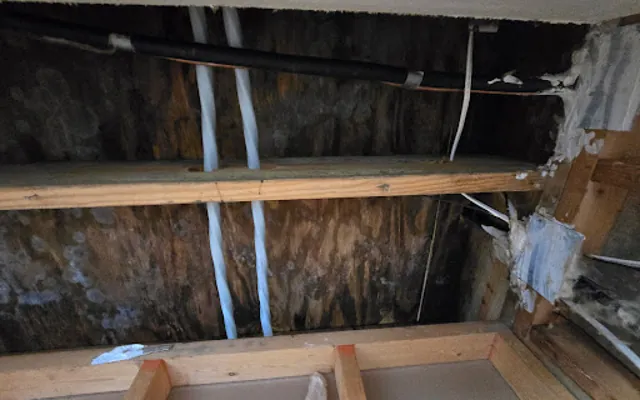
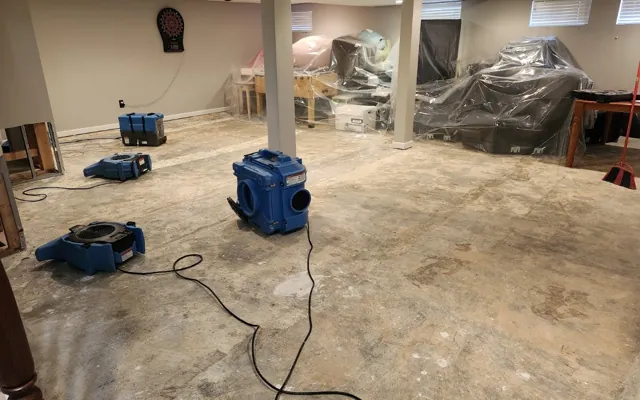
When ice dams melt and leak into a Cabbagetown, GA home, local crews respond fast to extract the water and dry the structure, following IICRC-standard methods to prevent mold in the tight framing.

Technicians first confirm the roof leak from the melting ice dam has stopped. They arrange a temporary cover if needed and map every ceiling, wall, and attic area the backed-up water reached in the compact home.
Soaked attic insulation is bagged and removed from the Cabbagetown cottage. It holds melt water against the roof deck and ceiling below and cannot dry properly once saturated, risking further damage to the structure.
Air movers and dehumidifiers are set to dry the roof deck, attic framing, ceilings, and wall cavities. The crew dries to an IICRC-standard target so trapped moisture does not linger and feed mold growth.

Ice dam water damage cleanup in Cabbagetown commonly runs from about $1,500 to $7,000, depending on how much melt water entered, whether attic insulation and ceilings must be dried or replaced, and if mold has taken hold. A minor eave leak sits at the low end, while water spreading across ceilings and into walls reaches the high end. The crew documents readings and photos so the carrier has clear support.
In the compact shotgun houses and worker cottages of Cabbagetown, decades-old roofing and tight framing mean melt water from ice dams can quickly spread from an eave into ceilings and shared walls. A single slow leak can soak attic insulation and seep into neighboring spaces, demanding immediate attention to stop the damage. Aging roofs on the neighborhood's historic mill cottages, combined with Atlanta's humid subtropical freeze-thaw cycles, lead to ice dams. The melt water backs up under shingles and into the old, compact structures where it soaks insulation and spreads through tight framing. From Cabbagetown, crews also cover nearby Old Fourth Ward, Peoplestown, Pittsburgh, Summerhill, Grant Park, Inman Park. See every neighborhood and town on the full service area page.
See all areas servedEvery loss is photographed, measured, and logged from the first visit, so the paperwork holds up with your insurance carrier.
Technicians follow recognized IICRC drying standards and prove the work with daily moisture readings, not guesswork.
Emergency dispatch any hour of the day or night, with a real crew on the way, not a callback in the morning.
A real crew dispatched any hour, not a callback in the morning.
Trained technicians following recognized IICRC drying standards.
Truck-mounted, portable, and submersible for any size loss.
The loss is documented and billed to the carrier directly.
In Atlanta, cleanup commonly ranges from about 1,500 to 7,000 dollars. Cost depends on how much melt water entered, whether attic insulation and ceilings need drying or replacement, and if mold is present. A minor eave leak is at the low end.
Local crews document the job with moisture readings and photos, packaging the information so the homeowner's insurance carrier has clear support. They provide this documentation as part of the service, but the homeowner typically files the claim directly.
Crews are on call 24 hours a day and can be on the way to Cabbagetown within the hour.
Call (678) 990-6039